Six things an illustrated map can do that no other format can
There's a version of a map that just tells you where things are. And then there's an illustrated map — which does something quite different.
Over the past few years I've worked on illustrated maps for a wide range of clients: heritage organisations, farmers, authors, and private individuals commissioning personal gifts. What strikes me, looking back across these projects, is how differently each map was being asked to work. Not one of them was simply about geography.
Here's what I mean.
1. It records what a place meant to someone at a specific moment in time
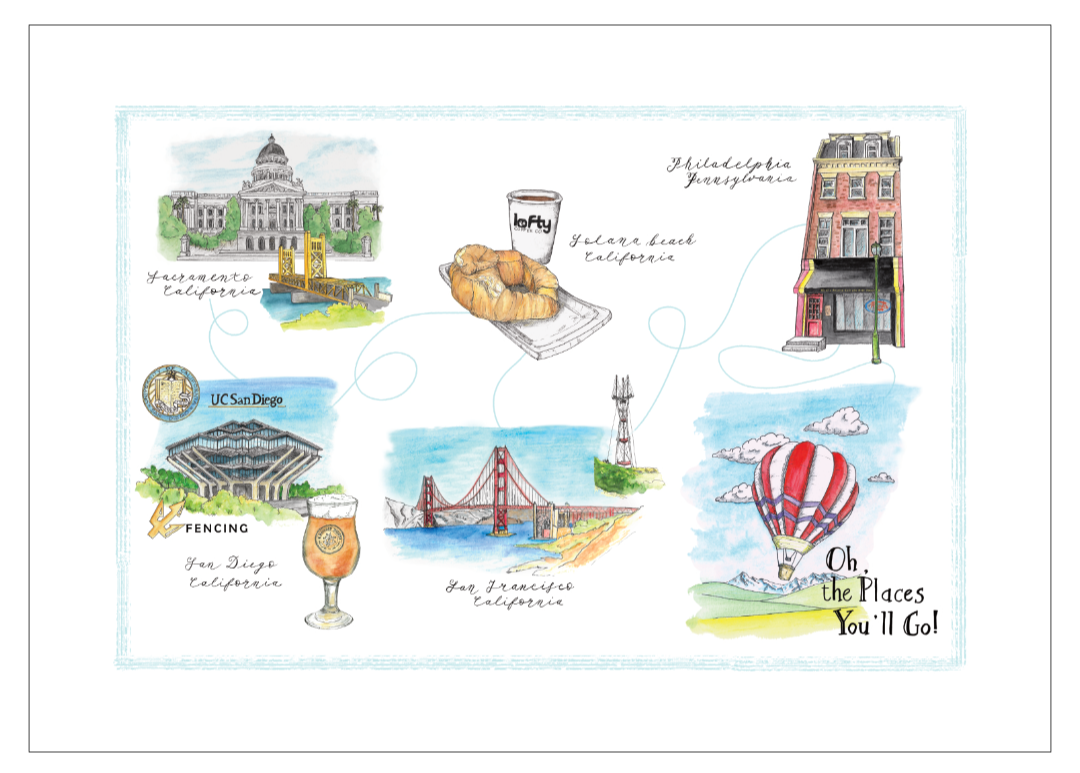
A client once asked me to create a full-colour illustrated map as a 30th birthday gift for a friend — ten landmarks and objects that had meant something to the recipient at different stages of their life. The locations spanned years and miles, but together they told a story no standard map could tell. An illustrated map can hold memory in a way that a photograph or a list of places simply can't.
2. It helps people feel connected to a landscape — not just oriented within it
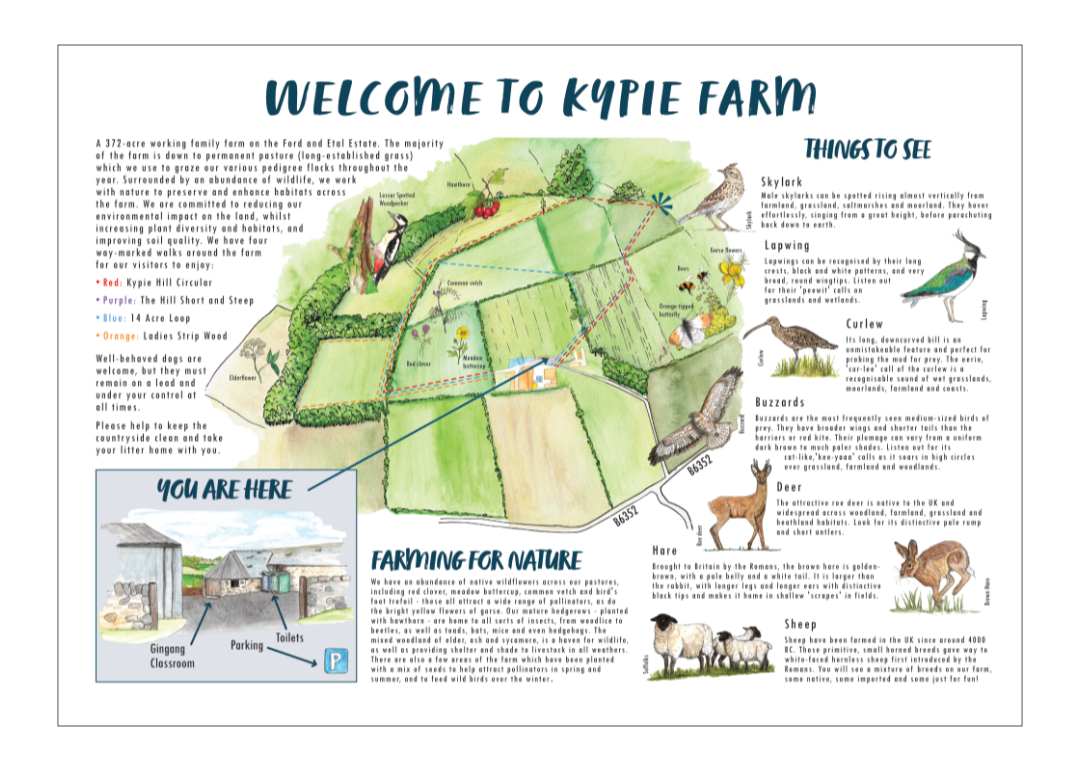
When I created a welcome board and illustrated map for Kypie Farm in North Northumberland, the brief wasn't just about helping visitors find their way around. It was about helping them feel part of a place — to understand its walking routes, yes, but also its wildlife, its habitats and the way the land is managed. A well-designed illustrated map doesn't just show you where to go. It tells you why it matters.
3. It makes an imagined or historical world feel real and navigable
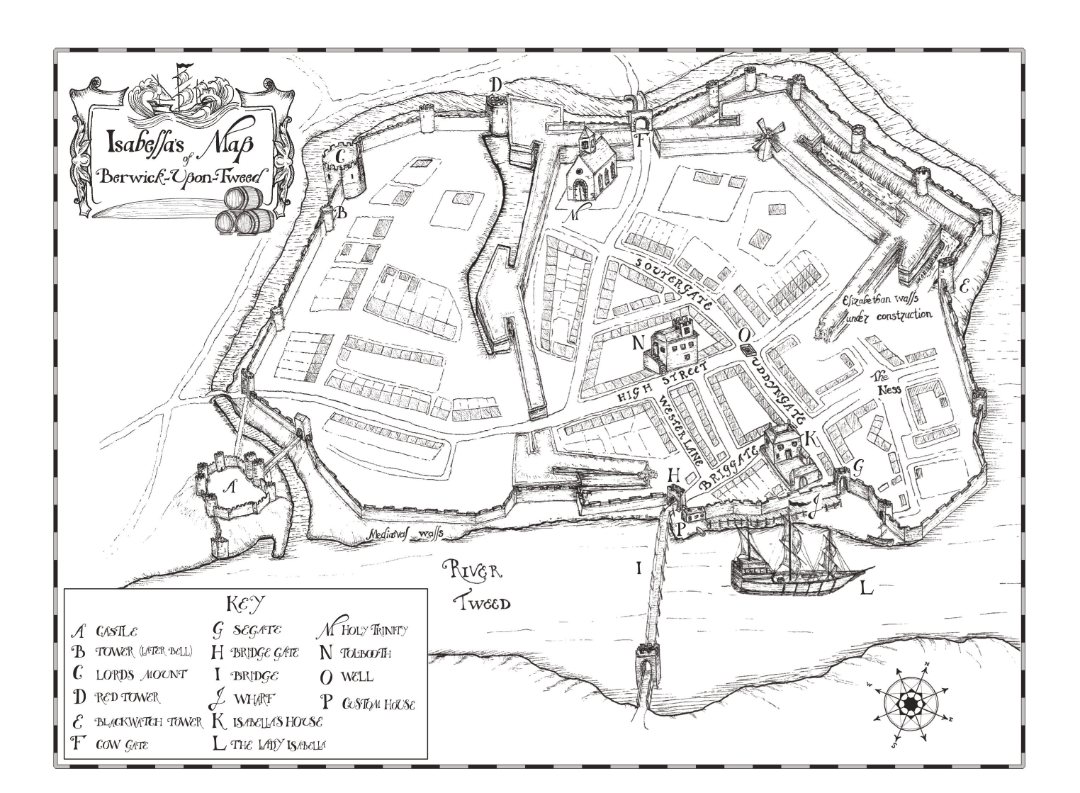
When author Amanda Roberts commissioned a map for her historical fiction novel Lady of the Quay — set in sixteenth-century Berwick-upon-Tweed — the map had a specific job to do: to make a world that no longer exists feel tangible to a reader. Illustrated maps have a long history in fiction for exactly this reason. They ground a story in place, and they invite readers in before they've even reached chapter one.
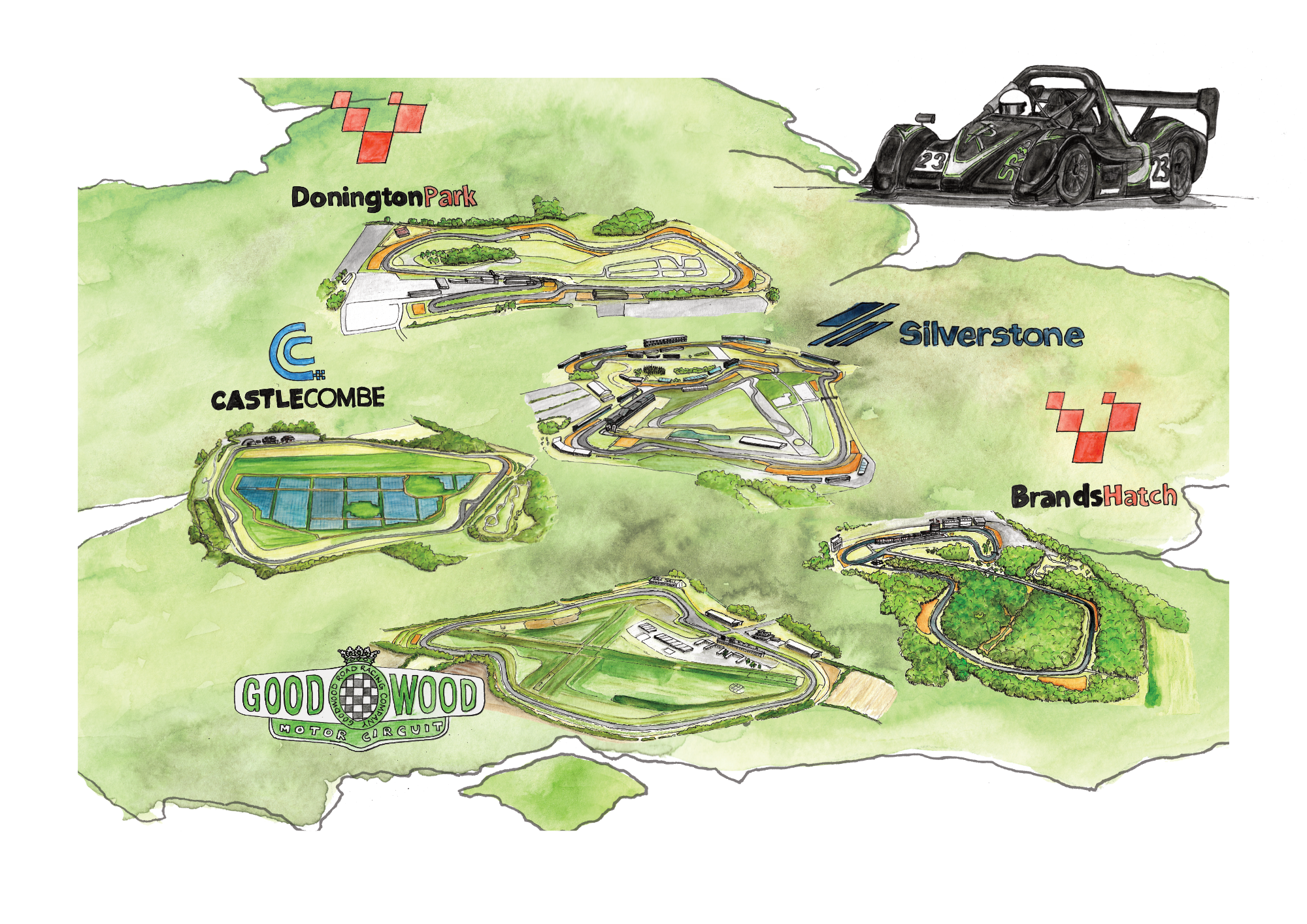
4. It celebrates passion and personal story without needing a single word of explanation
A client came to me wanting to mark her father's 70th birthday with something genuinely personal — a map of five English motor racing circuits where he had raced his car. The result was something that communicated a whole life's passion at a glance. No caption needed, no lengthy explanation. An illustrated map can distil what matters to someone into a single image that's also beautiful enough to frame.
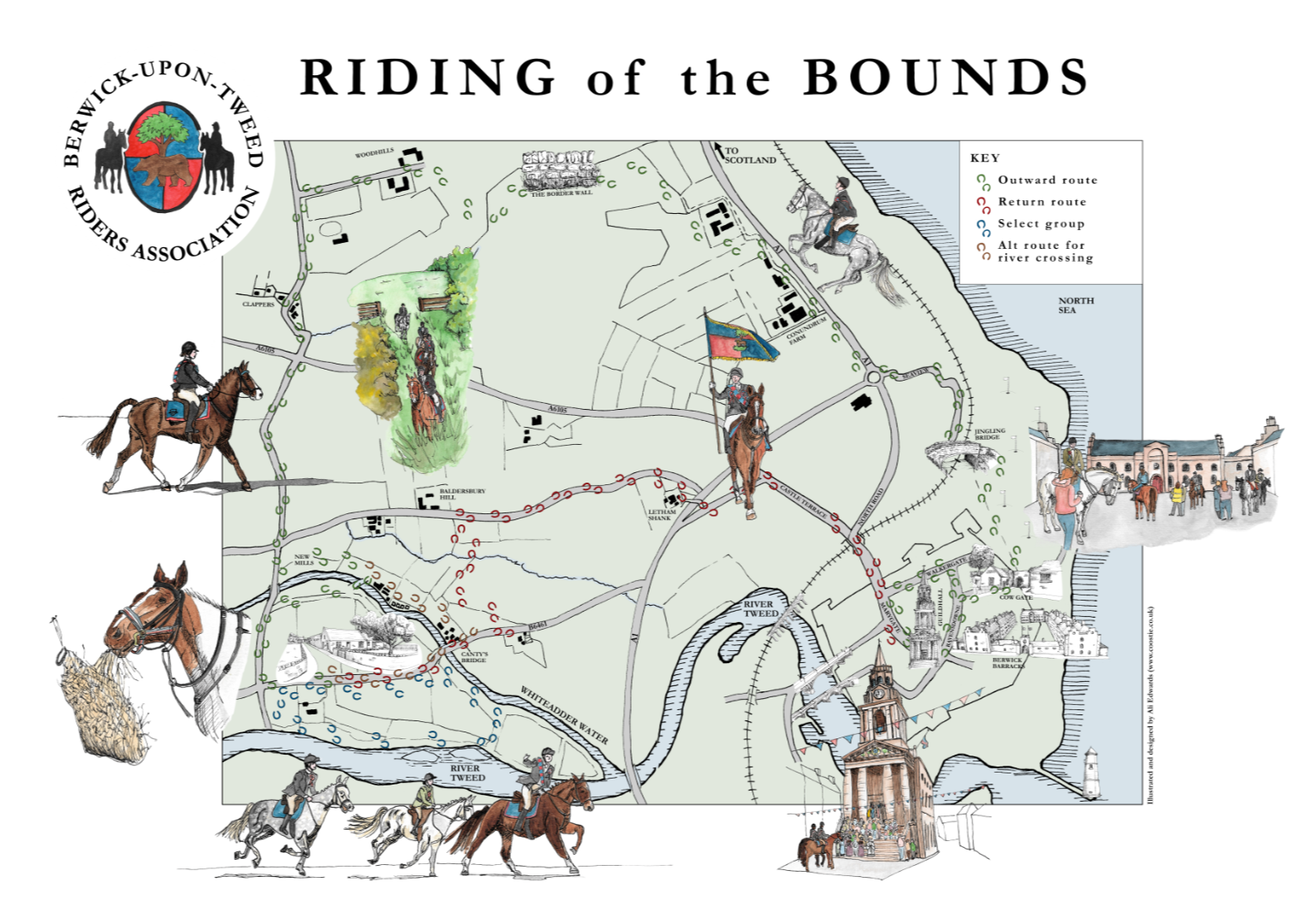
5. It keeps a living tradition visible and understood
The illustrated map I created for the Berwick Riders Association's website was about documenting a tradition — the Riding of the Bounds — that has been taking place in Berwick-upon-Tweed for more than four centuries. Maps like this do important work: they make the intangible tangible, giving communities a visual record of something they might otherwise struggle to explain to an outsider. Heritage and community organisations often underestimate how much a well-crafted illustrated map can do for public engagement and storytelling.
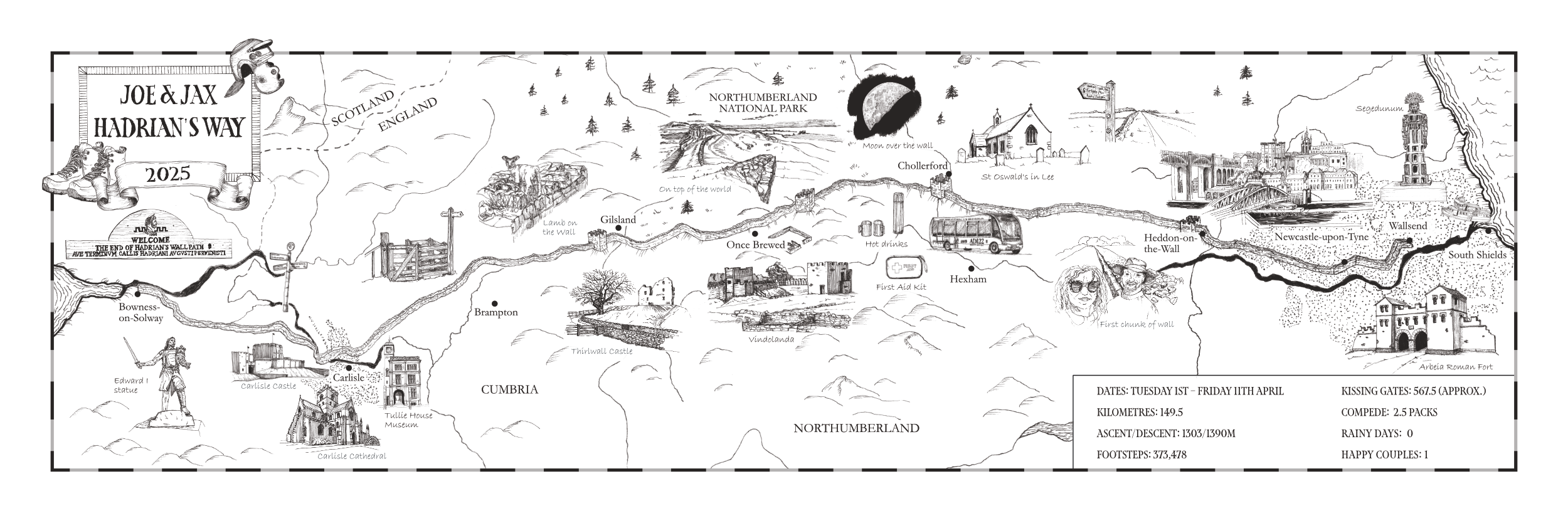
6. It turns a personal experience into something worth keeping
When a client walked the length of Hadrian's Wall, they wanted more than photographs to mark the journey. The illustrated map I created for them captured the route, the landscape and the key moments of the walk in a way that could be framed and kept — a record of an experience that would otherwise exist only in memory. Some of the most meaningful illustrated maps I work on are the ones that ask: how do we make this moment last?
Every one of these maps started with a different brief and a different purpose. But they all share something: they were doing a job that no other format — a photograph, a designed graphic, a standard cartographic map — could quite do in the same way.
If you have a project, a place, a story or an event that you'd like to bring to life through an illustrated map, I'd love to hear about it.