Designing a Welcome Board & Illustrated Map for Kypie Farm
Celebrating Wildlife, Farming with Nature, and National Mammal Week
21st to 27th April 2025 is National Mammal Week, organised by the Mammal Society - Britain’s leading charity devoted to the science-led conservation of mammals. This year's theme is ‘Where the Wild Things Should Be’ highlighting how much wilder our nature-depleted landscapes should be and how everyone can play a role in restoring them.
Farmers can play an incredible role in restoring habitats, protecting wildlife, and strengthening local communities and so I wanted to take this opportunity to tell you about a project I worked on with a local farm, keen to celebrate and share their nature-friendly approach.
Bringing Kypie Farm to Life Through Illustration
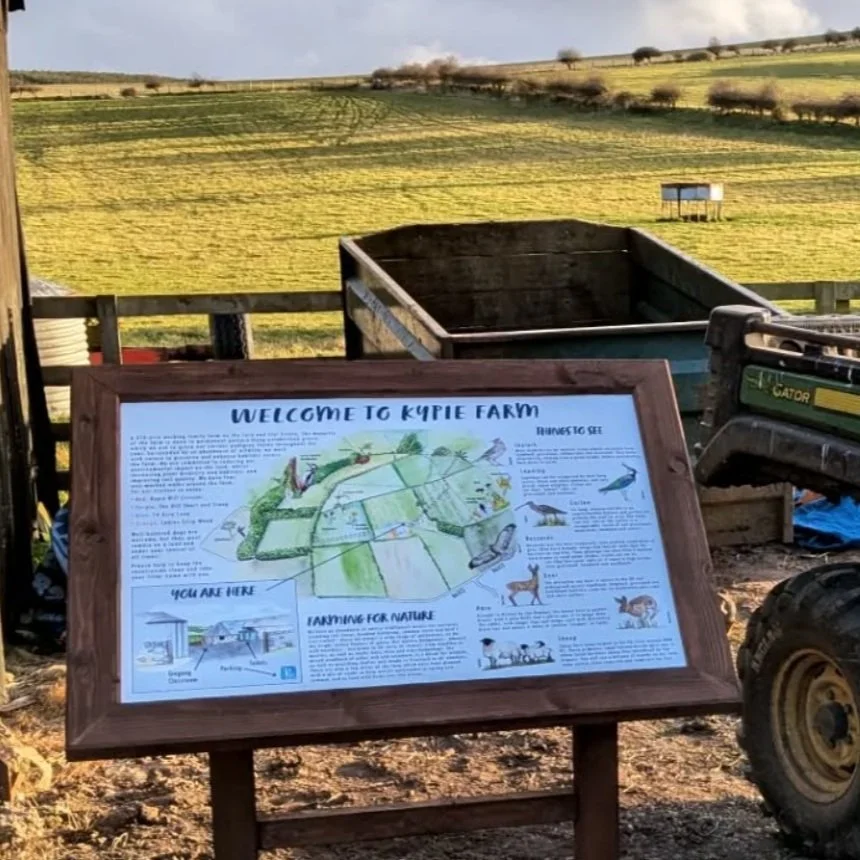
In 2024 I was commissioned by Anne Mair-Chapman to design a Welcome Board for her business, Kypie Farm. The goal was to create a custom illustrated welcome board featuring a hand-drawn map of the farm, complete with waymarked walking routes and relevant information for farm visitors (the farm encourages educational visits from schools and also has a number of Open Farm days through the year). One of the key deliverables for the Welcome Board was to highlight a range of wildlife that can be spotted on the farm, thanks to the way the land is managed.
Understanding the Brief: A Map to Explore & Connect with Nature

Anne Mair-Chapman runs Kypie Farm near Mindrum in North Northumberland. The farm is a 372-acre mixed arable and pedigree sheep farm and has been managed by the Mair family for more than 30 years. Anne wanted to commission a local designer to create a Welcome Board for visitors to the Farm. She wanted the board to include:
A beautifully illustrated map to help visitors orient themselves within the landscape
Incorporate the routes for four walking trails for exploring the farm
Some way of highlighting the wildlife and habitats that can be seen on the farm
My Creative Process: From Concept to Final Design
I had an initial discovery call over Zoom with Anne to find out a bit more about the project and whether she already had ideas for how the board could look and what she wanted to include.
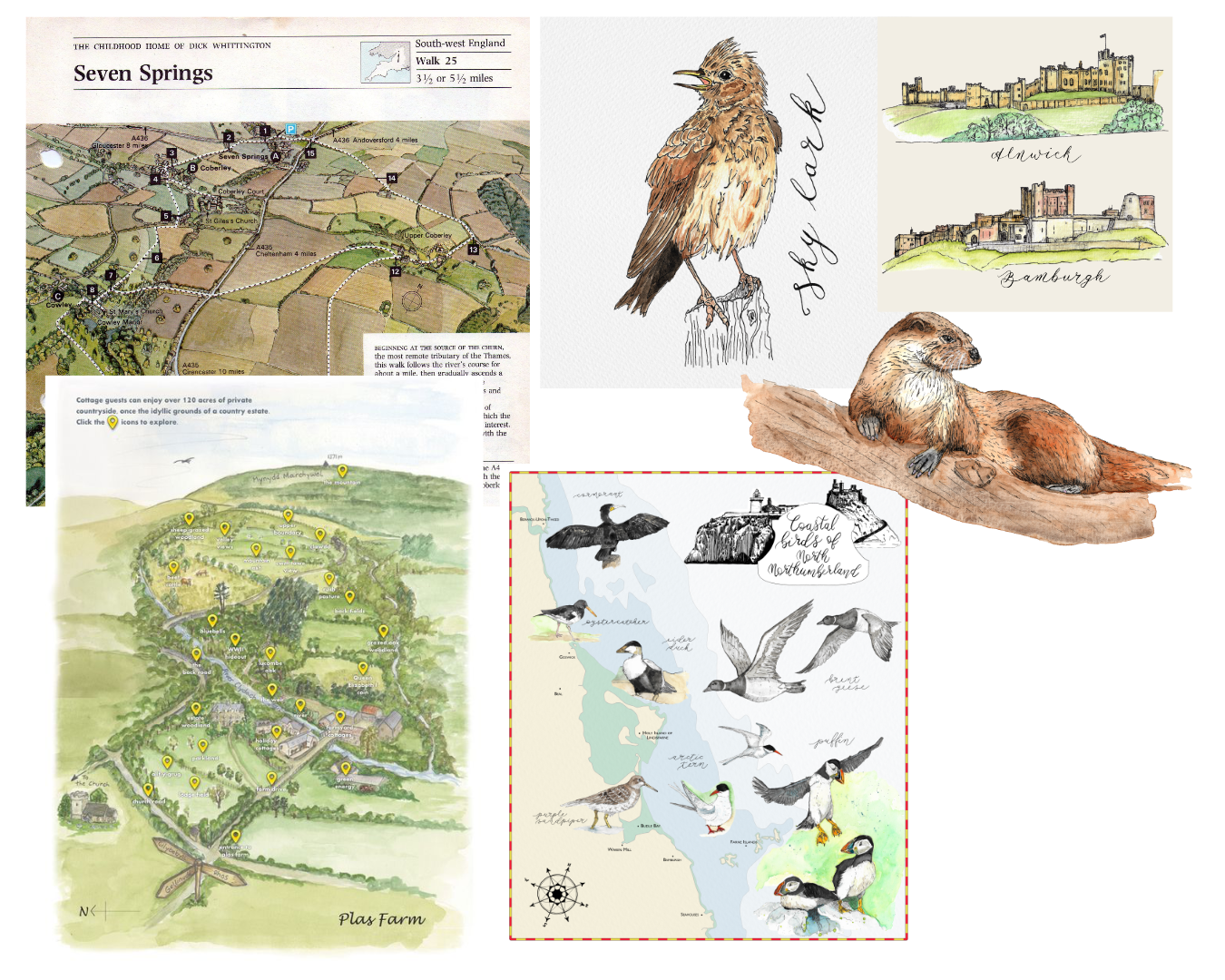
From this discussion, I put together a proposal document, outlining a couple of different options for how I could approach the brief and offering different price points so that Anne could choose the option that best fitted her ambition and her budget.
Included in the proposal were a couple of mood boards like this one - from our discovery call, it was clear that Anne was interested in a map that combined illustrated reference to the topology, alongside the depiction of visual landmarks, which made me think of the classic AA No Through Road walking trail maps that my parents used for hiking when I was a child.

I love illustrating wildlife, so being able to include 16 different species of plant, animal and bird found on the farm was the part of this project that I enjoyed the most. I did quite a bit of research into the flora and fauna that Anne suggested be included, to ensure that the illustrations were recognisable. I also drafted informative and educational copy to go on the board alongside the illustrations, to describe the wildlife and their habitats.
Here’s how this looked on the finished Welcome Board for two species: the Curlew and the Lapwing.
Where the Wild Things Should Be: Farming with Nature at Kypie Farm
One in four of the UK's 90 species of mammal are threatened with extinction. From polecats to red squirrels to seals and dolphins, the animals that call the British Isles are home are declining at an alarming rate. The Mammal Society runs National Mammal Week every year to raise awareness and promote conservation of British mammals and this year's theme of 'Where the Wild Things Should Be' celebrates, educates and encourages action around the need to protect our dwindling biodiversity.

As someone with a keen interest in conservation, it was therefore fantastic to work on this project with Kypie Farm who have been managing their land with nature-friendly farming practices for many years, under the Countryside Stewardship Scheme. The Mairs have been committed to reducing their environmental impact on the land, whilst increasing plant diversity and habitats, as well as improving soil quality.
Most of the farm is laid to pasture for the sheep to graze, which is home to an abundance of native wildflowers, including red clover, meadow buttercup, common vetch and bird's foot trefoil as well as native gorse bushes - all of which attract a wide range of pollinators. Mature hedgerows planted up with hawthorn are home to all sorts of insects, toads, bats, mice and even hedgehogs and the mixed woodland areas with elder, ash and sycamore are a haven for wildlife as well as providing shelter and shade for the livestock.
These various habitats are also home to a wide range of wild birds and animals that are benefitting from the nature-friendly way that the landscape on the farm is managed, from lapwings and sky larks, to deer and brown hare. For example, the curlew is a flagship species for our uplands with its evocative ‘curlee-curlee’ call. However, the curlew is one of the most pressing bird conservation priorities in the UK as the breeding population has nearly halved since the mid-1990s. Maintaining habitats that are rich in biodiversity, such as at Kypie Farm, is helping to stabilise the curlew population.
The farm has a strong educational programme, offering farm walks, bird watching, mini beast hunts and many more activities that help children and young people explore nature, as well as learning where their food comes from and the part farmers play in looking after the environment.
The farm is also a participant in Open Farm Sunday, managed by LEAF (Linking Environment And Farming), allowing the public to discover first-hand what it means to be a farmer and the fabulous work they do producing our food and enhancing the countryside. This year's Open Farm Sunday will be held on Sunday 8th June - visit the Kypie Farm website to find out more.
The Welcome Board has an educational role in helping people to understand how working farms can support wild spaces and so includes some key information about some of the species that can be seen within the landscape.
Artistic Details: Bringing the Map to Life in Watercolour & Ink
The illustrations for the map were all hand-drawn in ink before I added watercolour.
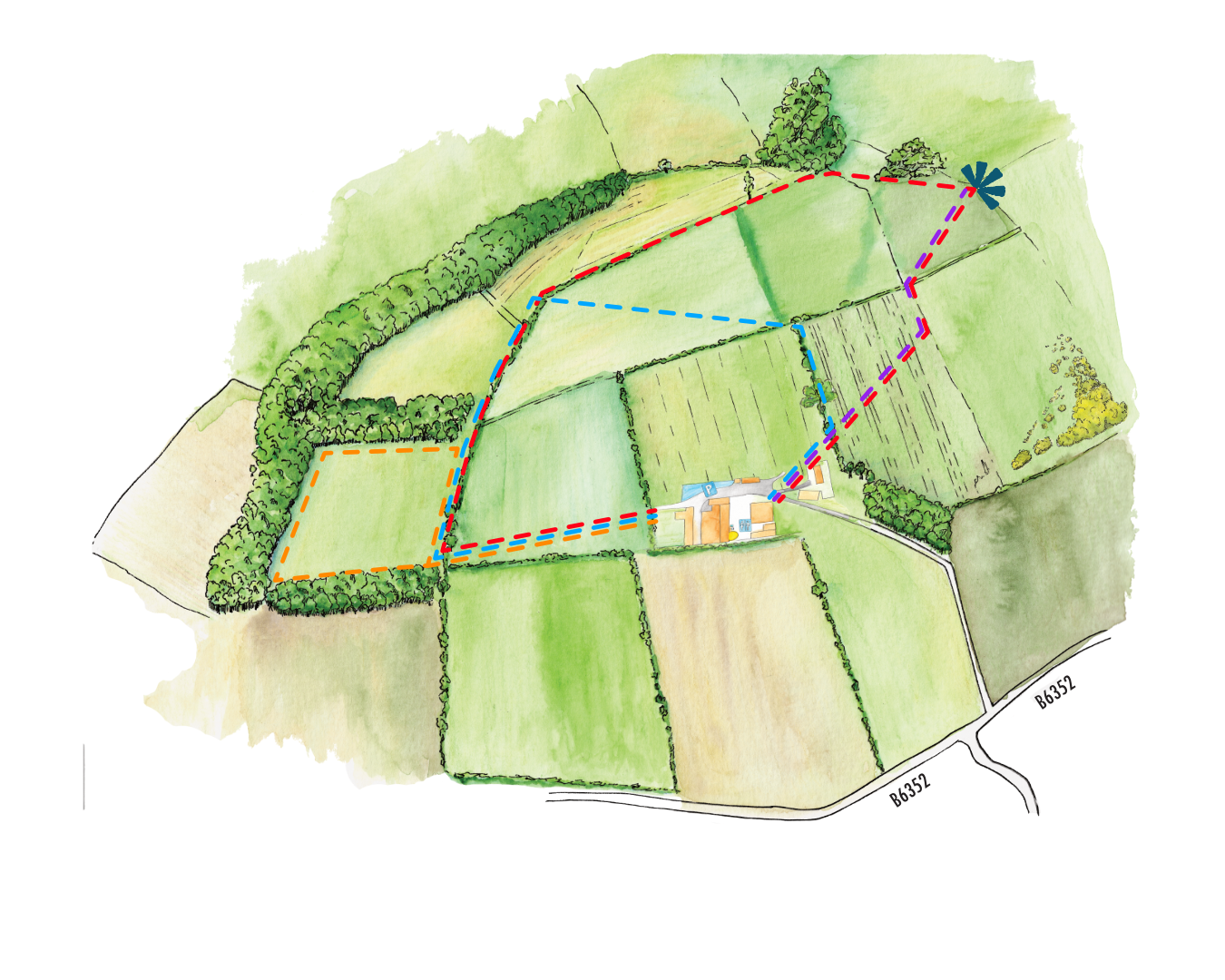
I started with the base map illustration, working from a combination of Google Earth and Google Maps to get the layout and a sense of topology in order to delineate the fields and natural landmarks such as wooded areas and hedgerows.
I used watercolour to give depth and dimension to the fields and hedgerows.
The four walking routes were overlaid on this map in my design software.
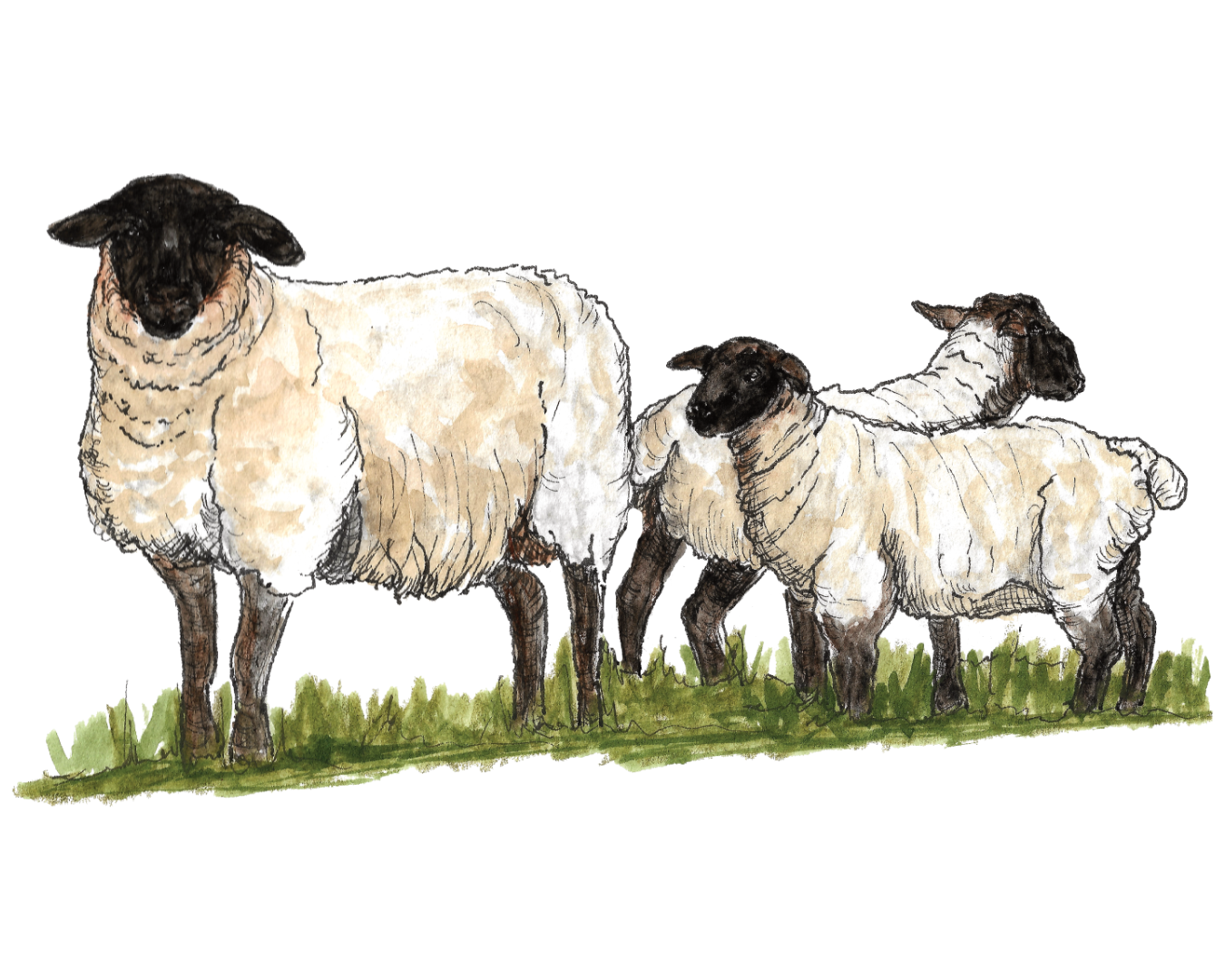
Then I illustrated all of the wildlife elements by hand in the same way, before digitising and adding them to the Board design.
This included x6 species of wildflower and plants (elderflower, gorse, hawthorn, bird’s foot trefoil, red clover, common vetch and meadow buttercup), x2 types of pollinator (bees and orange-tipped butterflies), x5 species of bird (skylark, lapwing, curlew, buzzard and woodpecker) and x3 mammals (brown hare, roe deer and sheep), including some of the native Suffolk breed sheep that are farmed at Kypie.
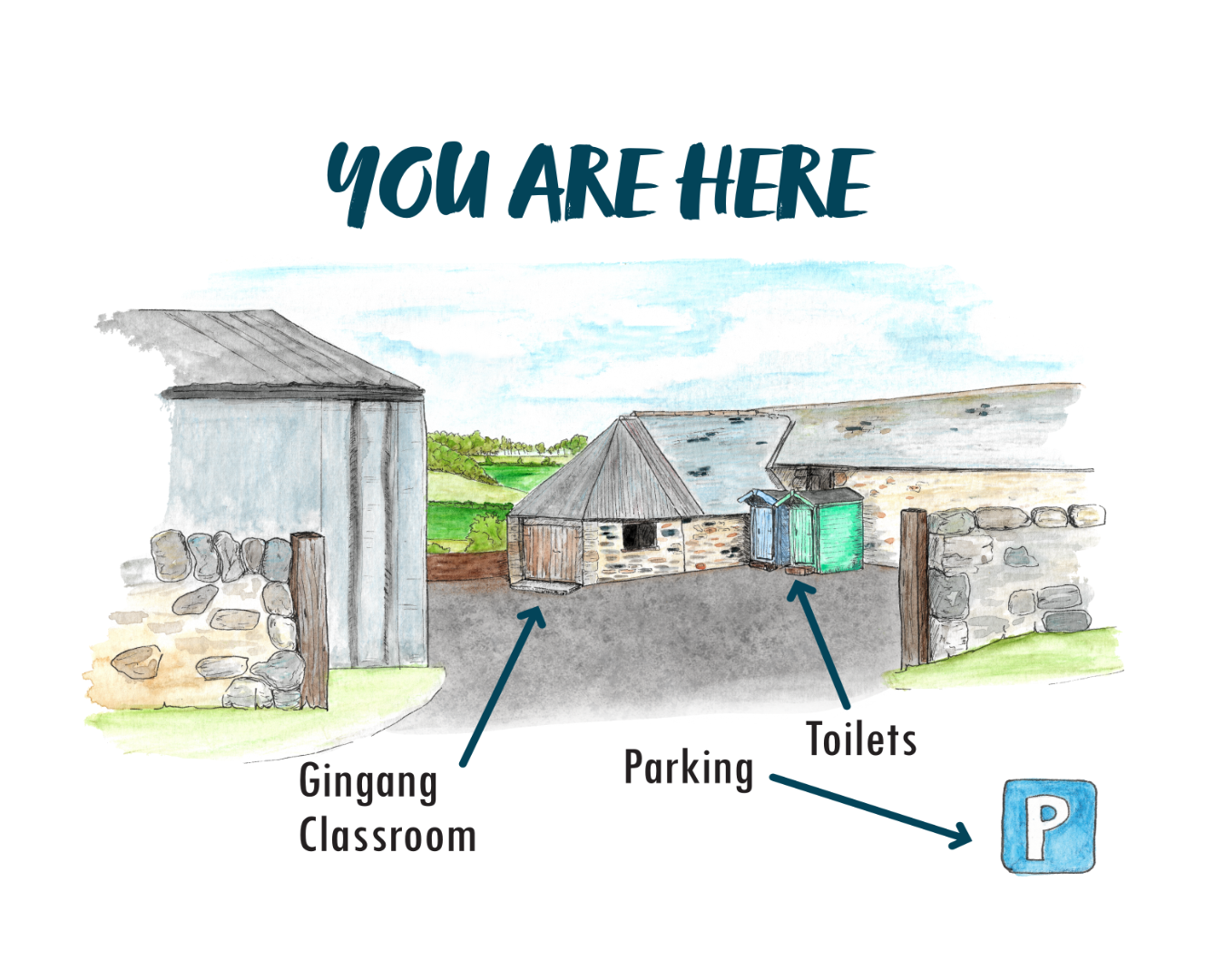
In addition to the wildlife and landscape illustrations I also worked on illustrations for the main farm buildings that visitors would need to access: the Gingang education centre, toilets and visitor parking.
As well as incorporating these onto the map in 2D form, I wanted to include a 3D pull-out section so that visitors could orient themselves within the site.
Finally, I wrote the copy for the Board and brought everything together into a finished design for client sign-off.
Client Feedback
Anne gave me the following testimonial at the end of the project:
"We commissioned the wonderful Ali from Coostie Illustration & Design last year to create a concept which I had for an information board/farm map for part of the farm and boy did she understand the assignment!! It's been a pleasure from the off to work with her! She completely "got" my idea and created something far better than I could have ever imagined."
The finished Welcome Board design for Kypie Farm
What This Project Meant to Me
At the time, this was the biggest commission I'd had as a freelance illustrator and designer, so I was quite nervous at points about how it would all come together. Fortunately, in my former life working as a Communications & Marketing professional, I'd had lots of experience working to a brief and managing my time on projects. I've also worked with a wide range of creative agencies over the years as a client myself, so I knew what I liked (and didn't) in terms of these relationships and put quite a lot of work into client management throughout the project - ensuring I understood the brief, setting expectations, regular communication with Anne, etc, which I think paid off with a very happy client! Working on this project has certainly made me a lot more confident about taking on new commissions (and I’ve done quite a few since!)
What was also lovely about the project was how much it chimed with my own interests in nature and wildlife, sustainability and steps we can take to halt or reverse biodiversity loss. Creating the educational content for the Board was something I enjoyed almost as much as the illustration.
Want a Custom Illustrated Map or Educational Welcome Board?
If you’re a farm, nature reserve, visitor attraction or eco-tourism business looking to install or update a Welcome Board or Nature Trail signage, do get in touch. I specialise in creating hand-drawn maps, nature illustration and bespoke signage that helps people connect with place and landscape.