Illustrating Wilson’s Tales of the Borders: Experiment & Explore
After completing the research phase of my Illustrating Wilson’s Tales of the Borders project (which you can read about here), I began the next stage: Experiment and Explore. This is the point where my ideas moved off the page and into materials, and where the focus shifted from analysis to hands-on testing, learning, and play. Rather than working towards finished illustrations straight away, this phase was about discovering what feels right for the stories I’ve chosen, and for me as an illustrator.
Getting to grips with ink
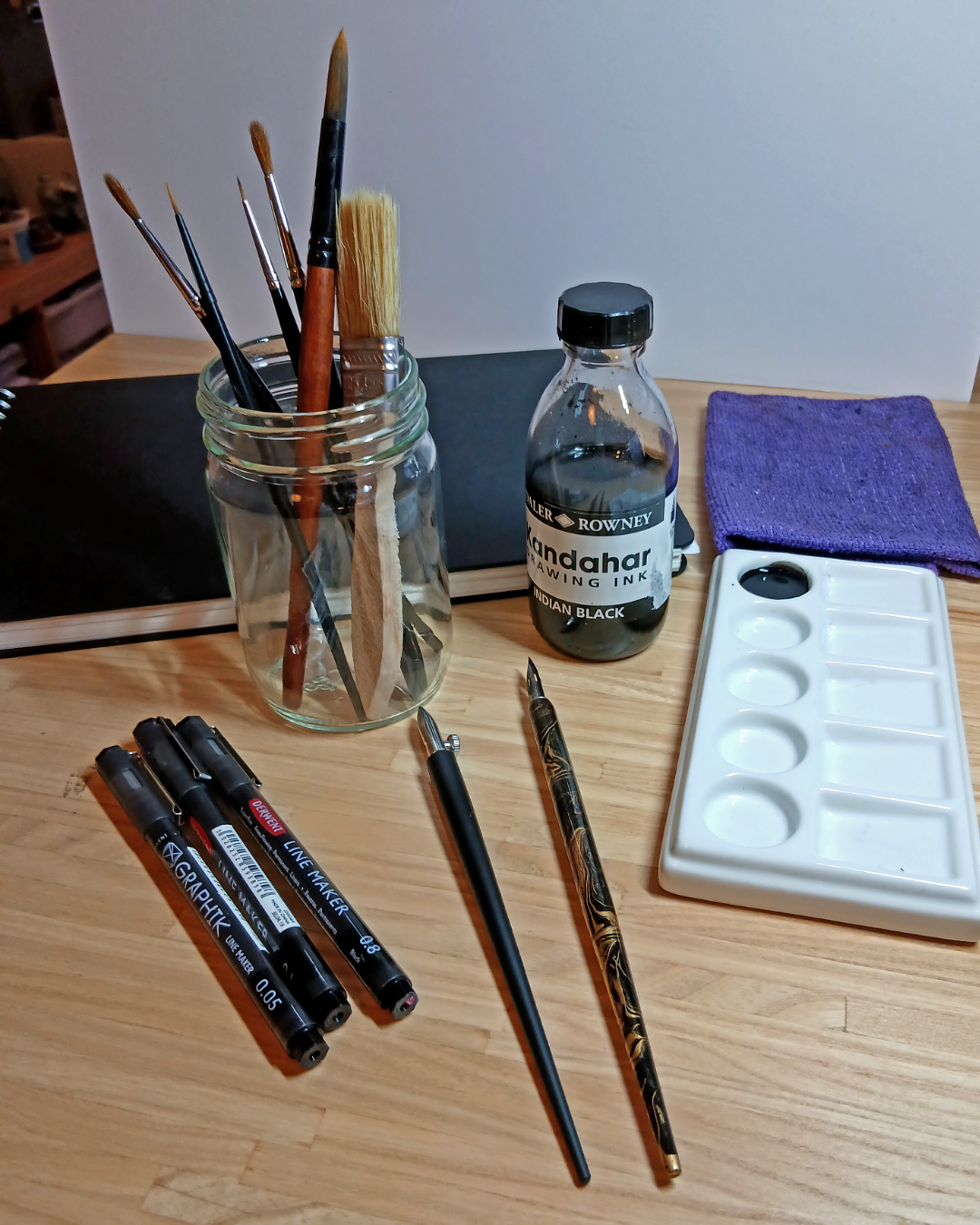
Ink felt like a natural place to start for me, as a lot of my current work to-date has been created using either fine liner pens or drip pen and ink. In addition, the high contrast, line quality, and expressive potential of ink link closely to the Victorian book illustrations and etchings that inspired this project in the first place. I’ve been experimenting with a range of tools — fineliner pens, dip pen and brushes — to explore how different marks, textures, and tonal effects might help capture the drama, atmosphere, and narrative tension of the Tales.
Exploring Ink Techniques
I really wanted to explore the different ways that ink behaves when you are using liquid ink from a bottle with either a dip pen or a brush, including the dramatic tonal variety that you can achieve by adding water versus neat ink.
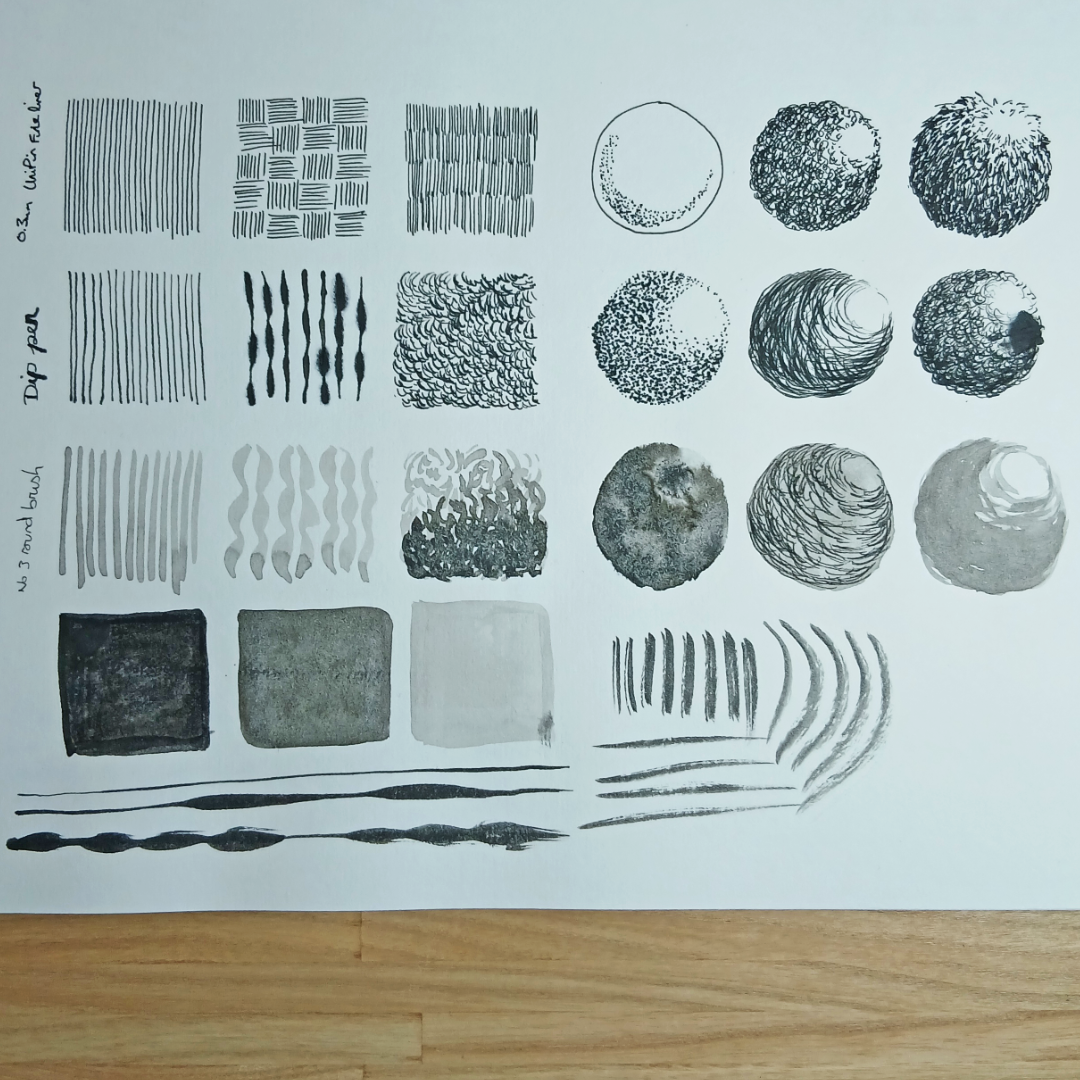
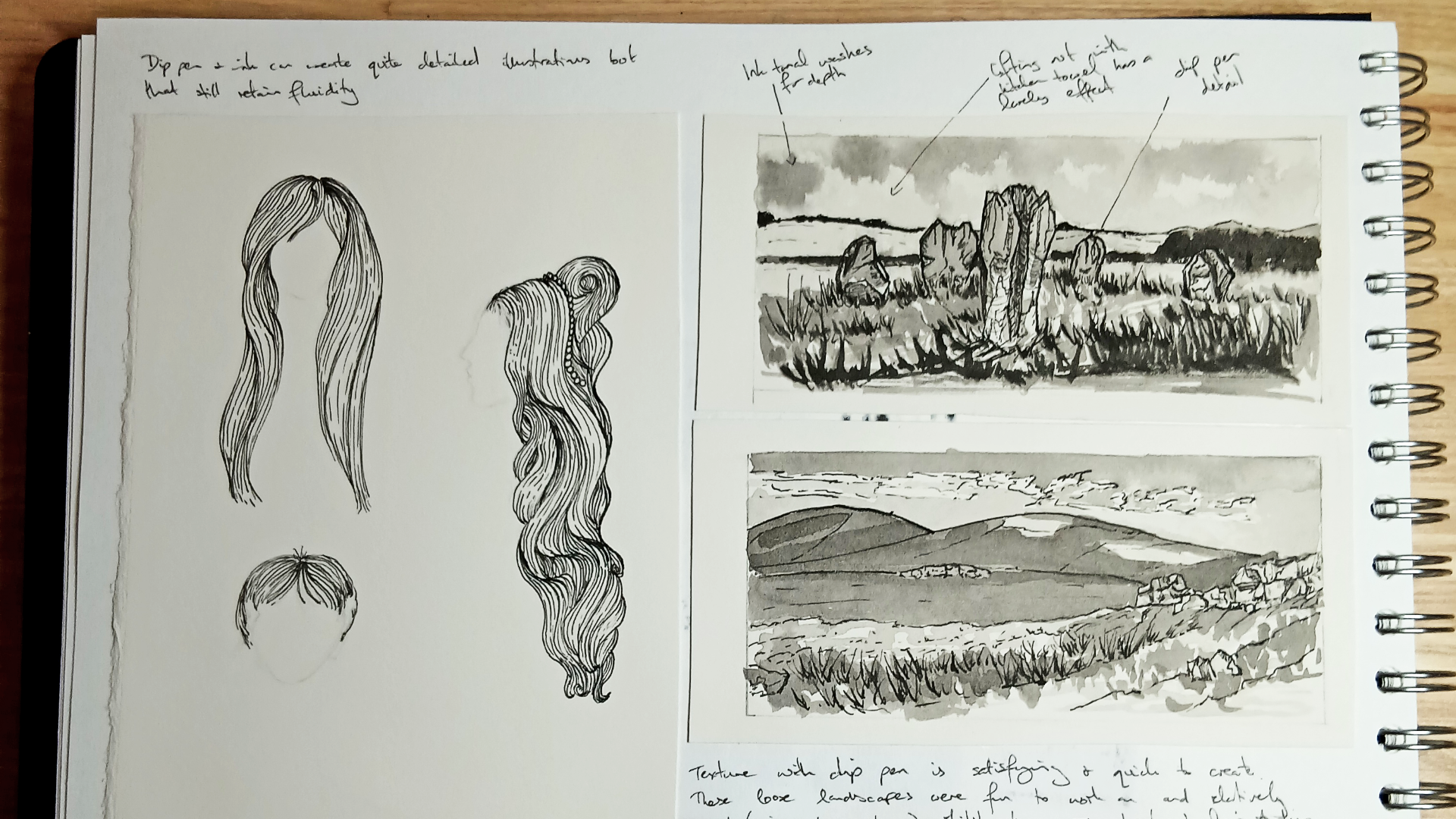
I spent quite a bit of time just playing with mark making with my different tools, before moving on to creating some small landscape studies using a combination of tonal ink washes and then adding detail with a dip pen.
Ink is a wonderful medium and there is something satisfying about creating with just black ink alone. I mostly discovered that it was messy and the results could be quite difficult to control but began to discover that I liked the effects I could create from starting from wet paper and then dropping in black ink to make dramatic backgrounds. Pulling out the wet ink and water with kitchen towel also produced really lovely cloud effects with crisp edges.
Given my love for detail, there is no chance that I won’t continue to work into a piece with fine line detailing once my tonal layers are dry, but again, I found that this worked well for me in terms of the sort of style of illustration that I was going for.
Learning to Draw Characters
Alongside this material exploration, I also spent time developing my character drawing skills, which feels particularly important for a project centred on morally complex, vividly drawn protagonists. I’ve not had a lot of experience in drawing people, as most of my work up to this point has featured wildlife or architectural subjects.
I’ve therefore been working through some online classes and books on the basics of figure drawing and character design, as well as lots and lots of gesture drawing of characters in different poses - trying to keep a focus on economy of line and delivering a sense of movement and intention (rather than focusing too much on detail). I’ve also been familiarising myself with the Loomis Method for drawing realistic faces and I’m hoping that I’ll be able to use this greater understanding to support my illustration of different characters.
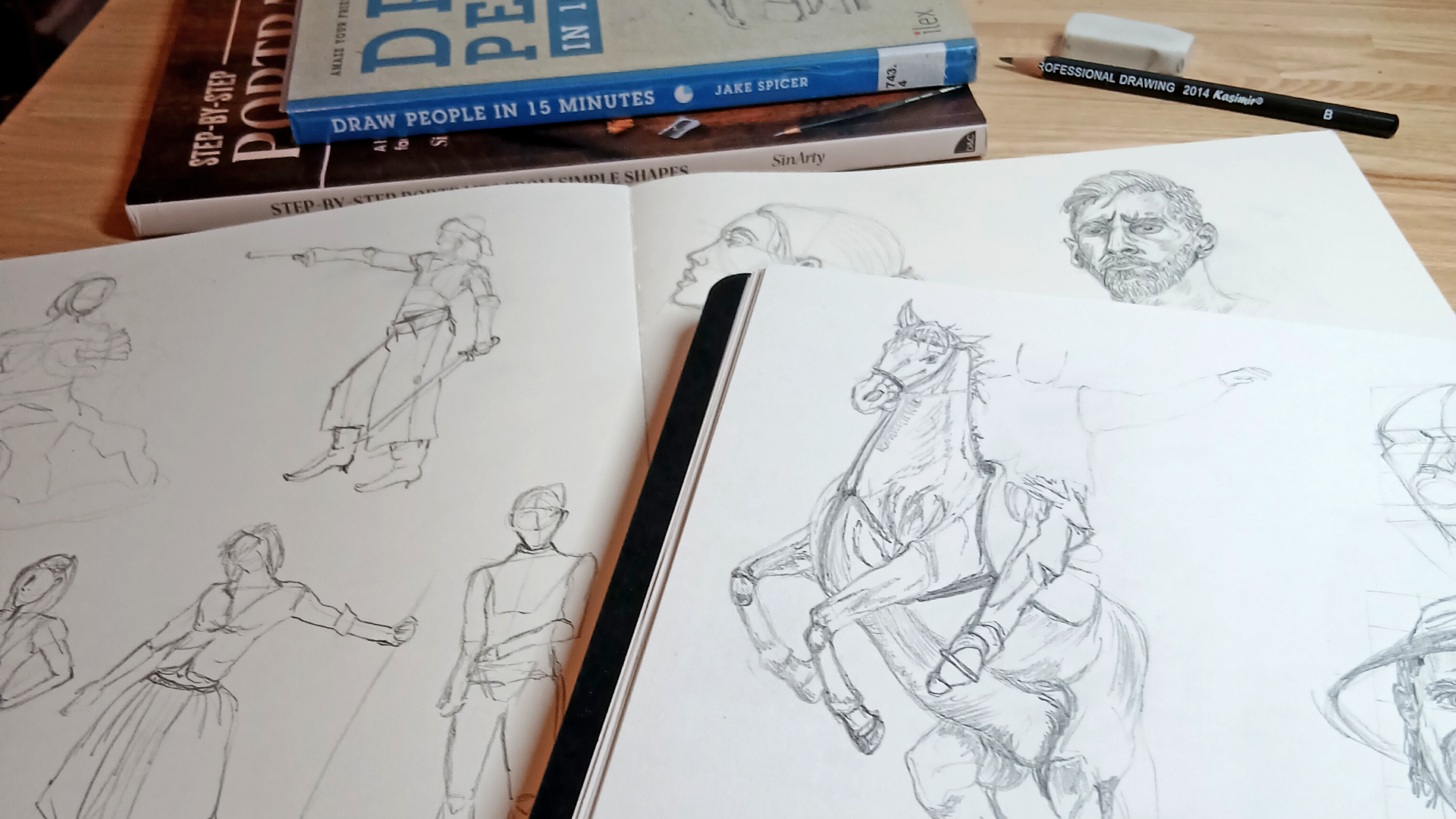
It has also been important to get to grips with character creation as this is the theme of the workshops I’ll be running between January and March for various different community groups. I’m going to share my approach for developing characters, from brainstorming through sketching thumbnails to creating my layout sketch and then the final illustrations (although in the workshops we’re going to use watercolour, rather than ink).
Moving from ‘Experiment & Explore’ into Artwork Development
Whilst I’d been intending to explore some other media as part of this project I somewhat ran out of time to look at charcoal and mixed media before I needed to get on with creating my actual illustrations. Although this is a bit disappointing as I’d been hoping to expand my practice into some new areas, actually having the time to explore ink in more depth has already pushed my work beyond what I was creating previously.
I’ve now finished my first illustrations from this project - one from each of the three Tales that I’ve been exploring. Stay tuned for my next post, which will take you through how I approached this next phase of the project to actually create some final artwork after all the preparation.
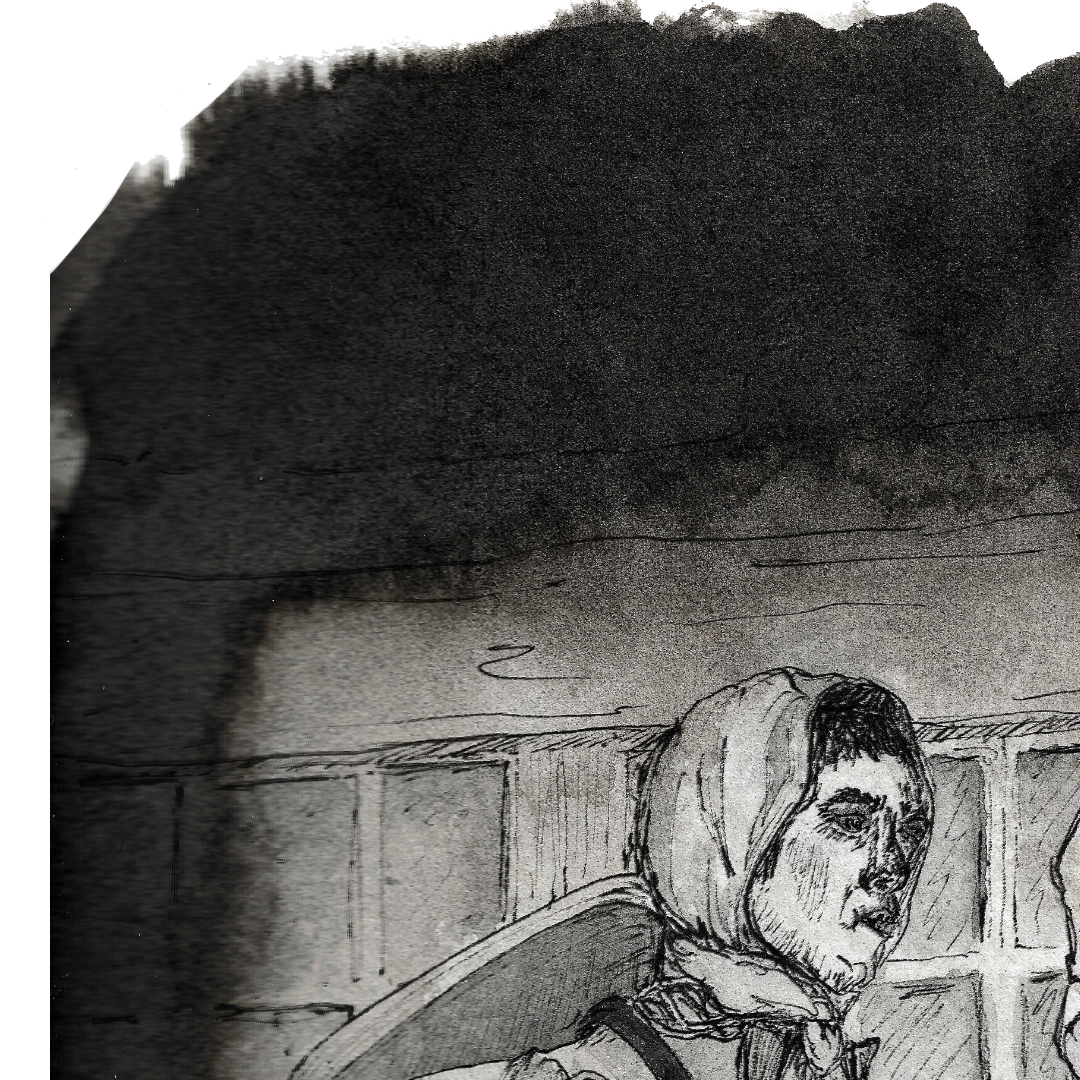
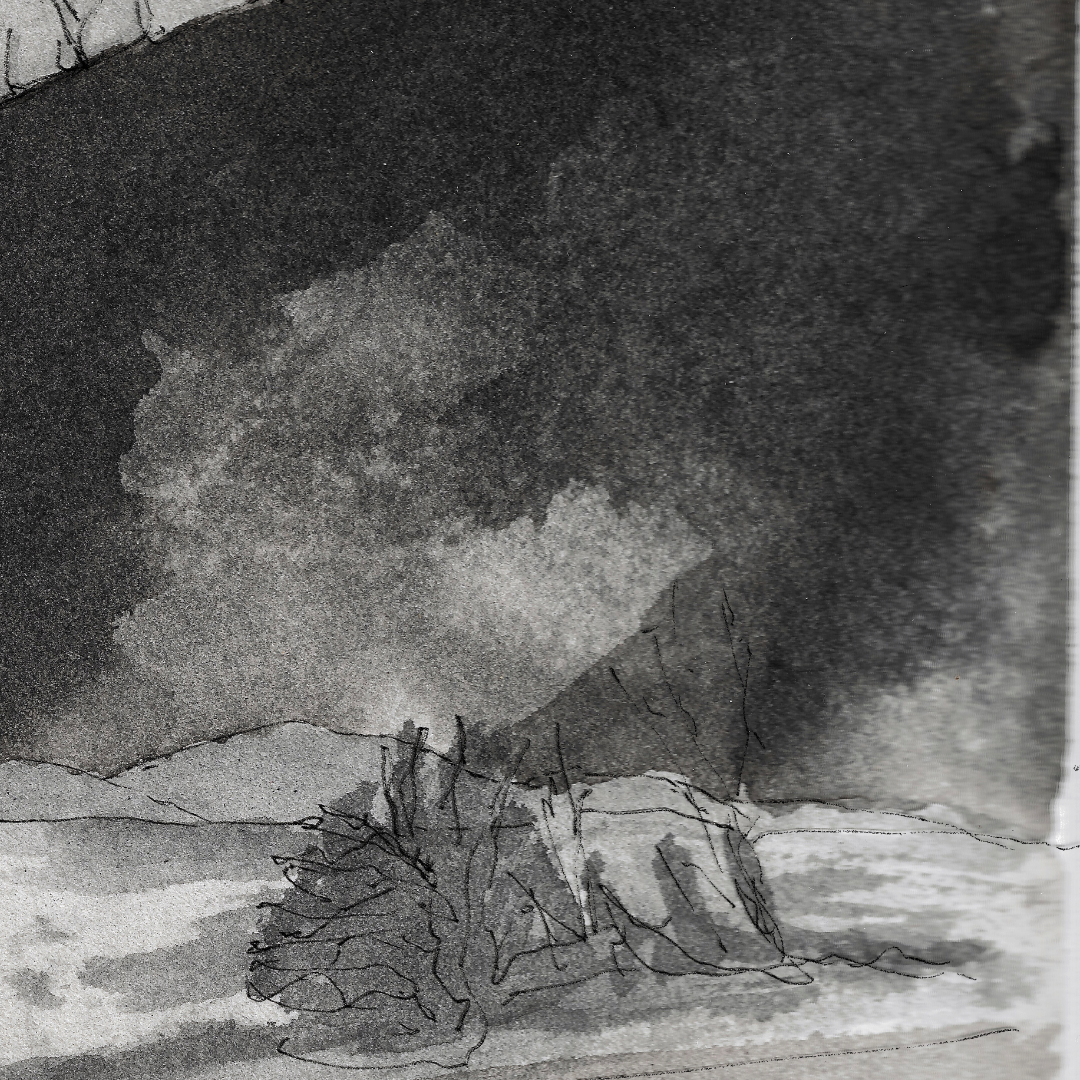
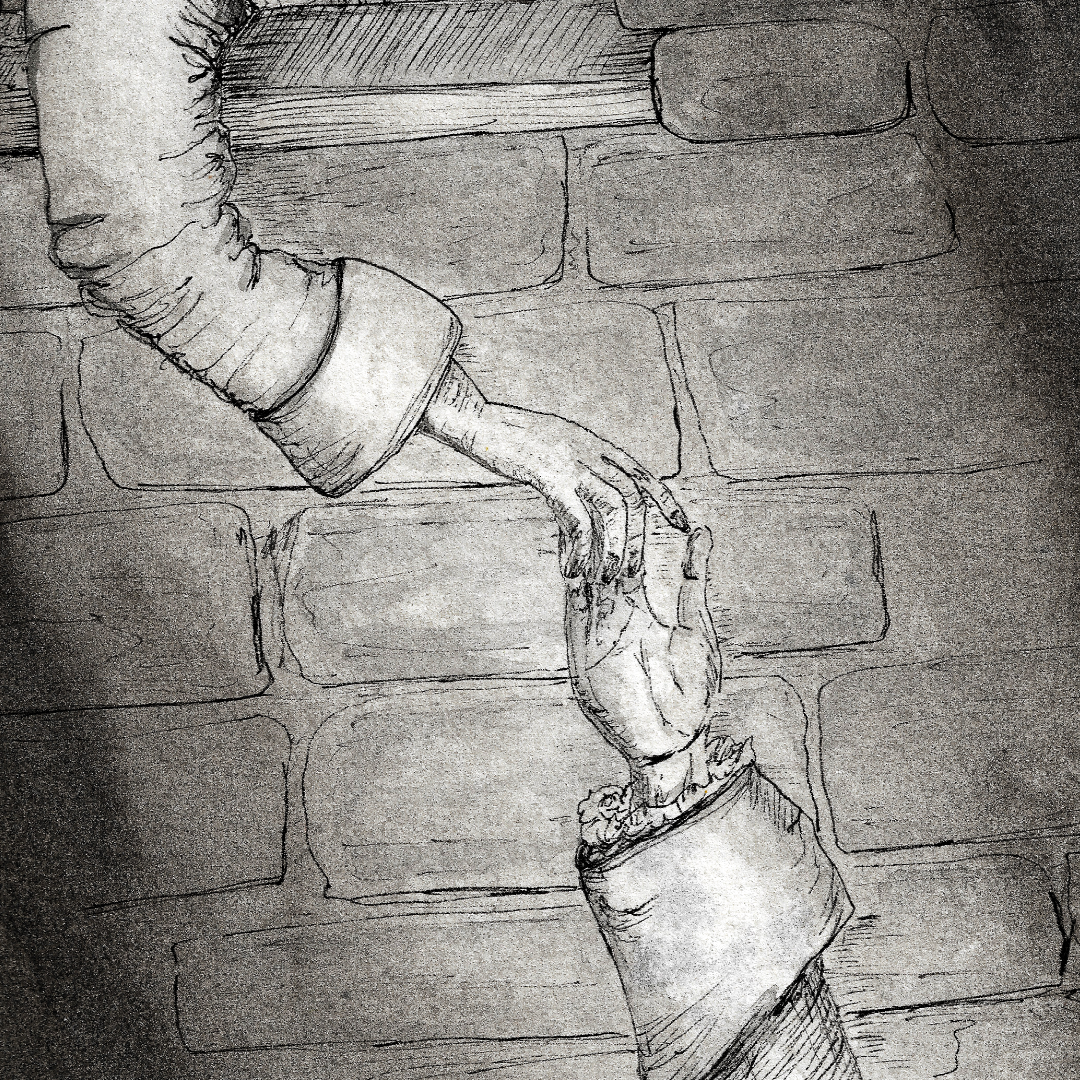
Some teaser images from my pieces illustrating ‘Launcelot Errington and his Nephew Mark’, ‘Grizel Cochrane’ and ‘Hume and the Governor of Berwick’.