
Top 5 car-free days out from Berwick-upon-Tweed: For Nature Lovers
As England’s least densely-populated county, Northumberland is an ideal location for wildlife and nature lovers, whether you live here, or are just visiting. One of the benefits of being an ‘incomer’ to the region is that you tend to blend these two roles - certainly my family and I have made a concerted effort to explore Northumberland and uncover some of its hidden gems. With coast and countryside literally on the doorstep, Berwick-upon-Tweed makes an ideal base for exploring a wide range of natural habitats and - as a car-free family - we’ve made the most of the excellent rail and bus connections to get out and about a bit further afield. (Berwick is a stop on the East Coast main line, operated by LNER, as well as being served by Arriva and Borders Buses, going South into England and North into Scotland, respectively).


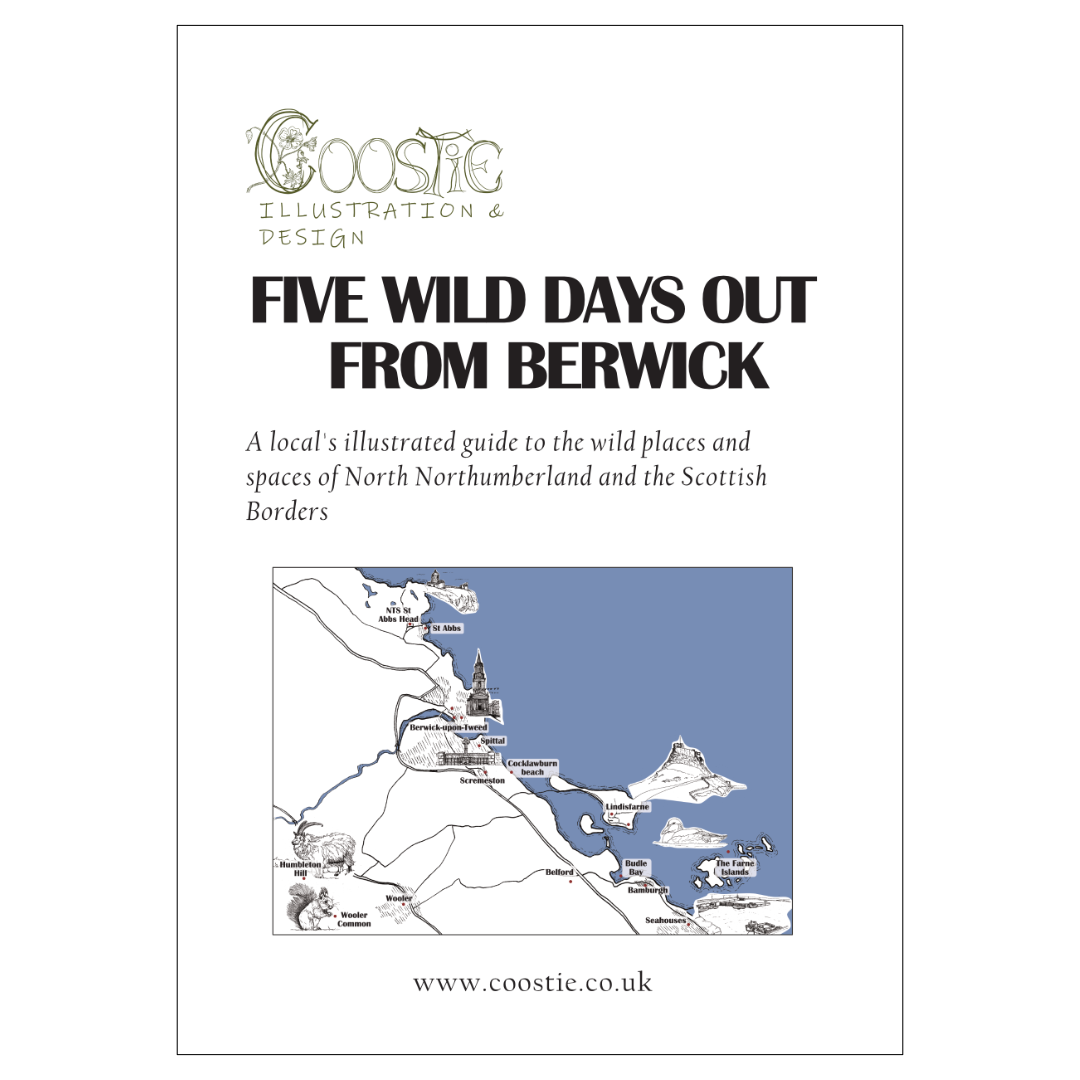
Five Wild Days Out from Berwick
Since publishing this blog post on my top 5 car-free days out, I’ve had the chance to create an illustrated booklet. Five Wild Days out from Berwick features some new adventures, updated information on things to see and do, as well as how to get there via public transport.
You can get the guide for free - as an instant download or by ordering a print copy with a special discount code - by subscribing to my newsletter.
Read on for my top 5 recommendations for days out starting from Berwick, with a focus on places to enjoy Northumberland’s natural landscapes and (hopefully) spot some wildlife!
St Abb’s circular
Scremeston to Berwick-upon-Tweed via the English Coastal Path
A visit to Lindisfarne from Berwick-upon-Tweed
Berwick-upon-Tweed to Budle Bay and Seahouses for the Farne Islands
Tweed Estuary boat trips

St Abb’s circular
Borders Bus 235 from either Chapel Street, or if you are starting from the Railway Station, the Castlegate Monument stop. Approx 35 mins travel time.
This first recommendation takes you over the border into Scotland, to the St Abb's Head National Nature Reserve, which is famous for its seabird colonies, including guillemots, kittiwakes and razorbills. On our visit (a bracing New Year's Day), we saw a huge variety of birds, but also a pod of dolphins and quite a few seals with young calves resting on the beaches. Starting from the National Trust for Scotland Car Park above St Abbs village, you can follow a 4-mile cicular route that is well-marked and takes in breathtaking views of highly populated bird nesting areas along the cliffs and along to the Victorian Lighthouse, as well as inland to Mire Loch (home to swans, ducks, damselflies and butterflies). There are a tea room and toilets adjacent to the car park, as well as a pottery and art gallery if you want to take home a souvenir.
Scremeston to Berwick-upon-Tweed via the English Coastal Path
The Arriva X15 and X18 and Borders Buses 464 pick up from the centre of Berwick-upon-Tweed with a route that goes through Scremerston. You'll want to alight at the Scremerston Memorial stop. Approx 20 mins travel time.
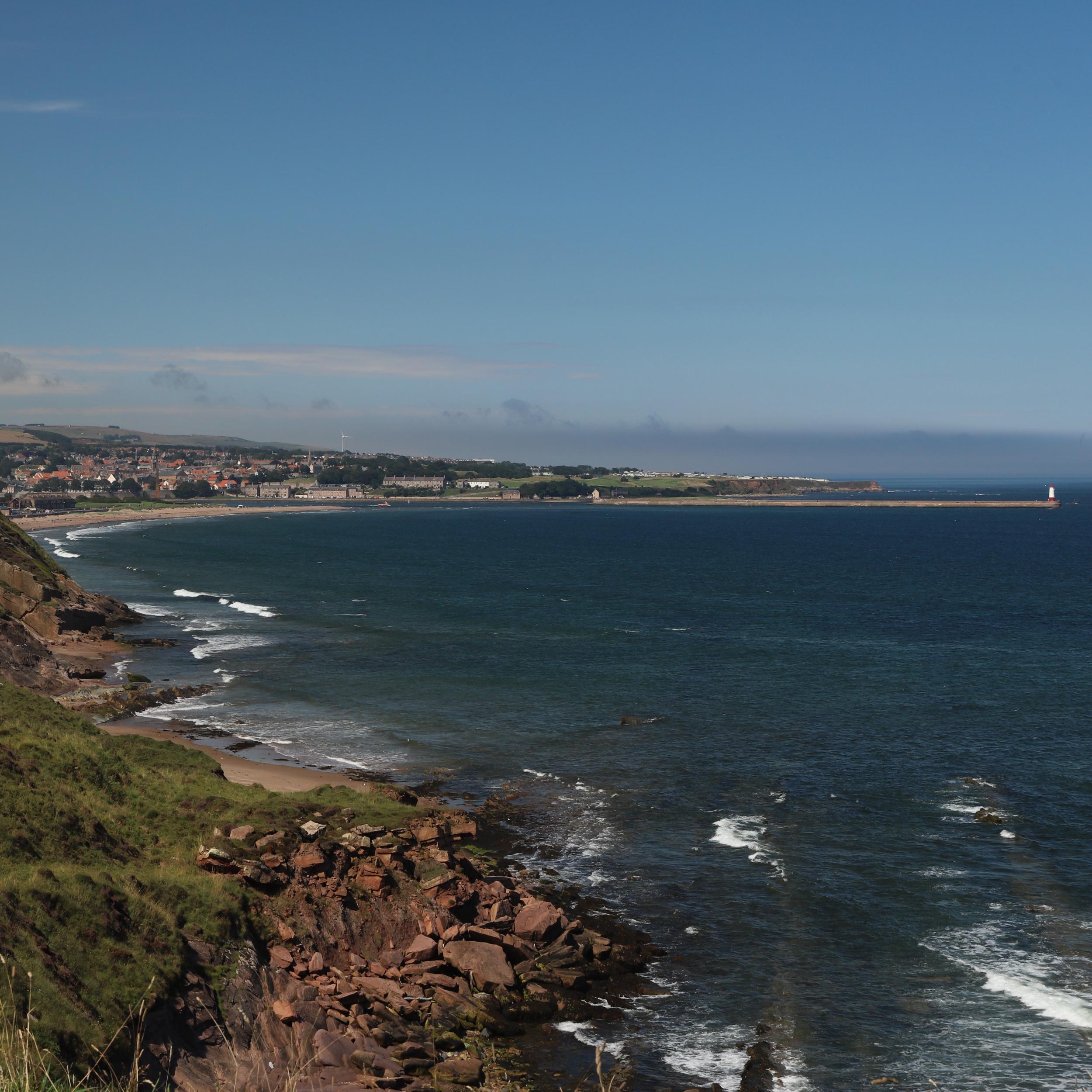
There is a lovely walk along the Northumberland Coastal Path from Cocklawburn Beach back to Berwick-upon-Tweed via Spittal and Tweedmouth (approx 8 miles, with the Cocklawburn Beach extension). Follow signs from Scremerston village to Cocklawburn Beach. When you reach the coastal path, you can choose to detour right and explore Cocklawburn Beach before retracing your steps to follow the Coastal Path back towards Berwick. Cocklawburn Beach is a long stretch of sandy beach, backed by dunes, and is an excellent spot for both rock-pooling and birdwatching. On your return walk to Berwick, the cliff-top coastal path delivers some spectacular views out to sea - if you're lucky you might catch sight of dolphins, seals and even the occasional minky whale, as well as diving gannets plunging into the sea from a great height. On arriving in Spittal, you can stroll along the promenade, before following the main road back through Tweedmouth and over the Berwick Old Bridge (remember to stick to the right-hand side crossing the bridge).
A visit to Lindisfarne from Berwick-upon-Tweed
The Border Buses 477 travels between Berwick-upon-Tweed and the Holy Island of Lindisfarne. The Causeway to Lindisfarne Island is tidal and is impassable at high tide, therefore the bus timetable changes daily and seasonally, so do double check before planning your trip! Travel time of approx 35 mins.
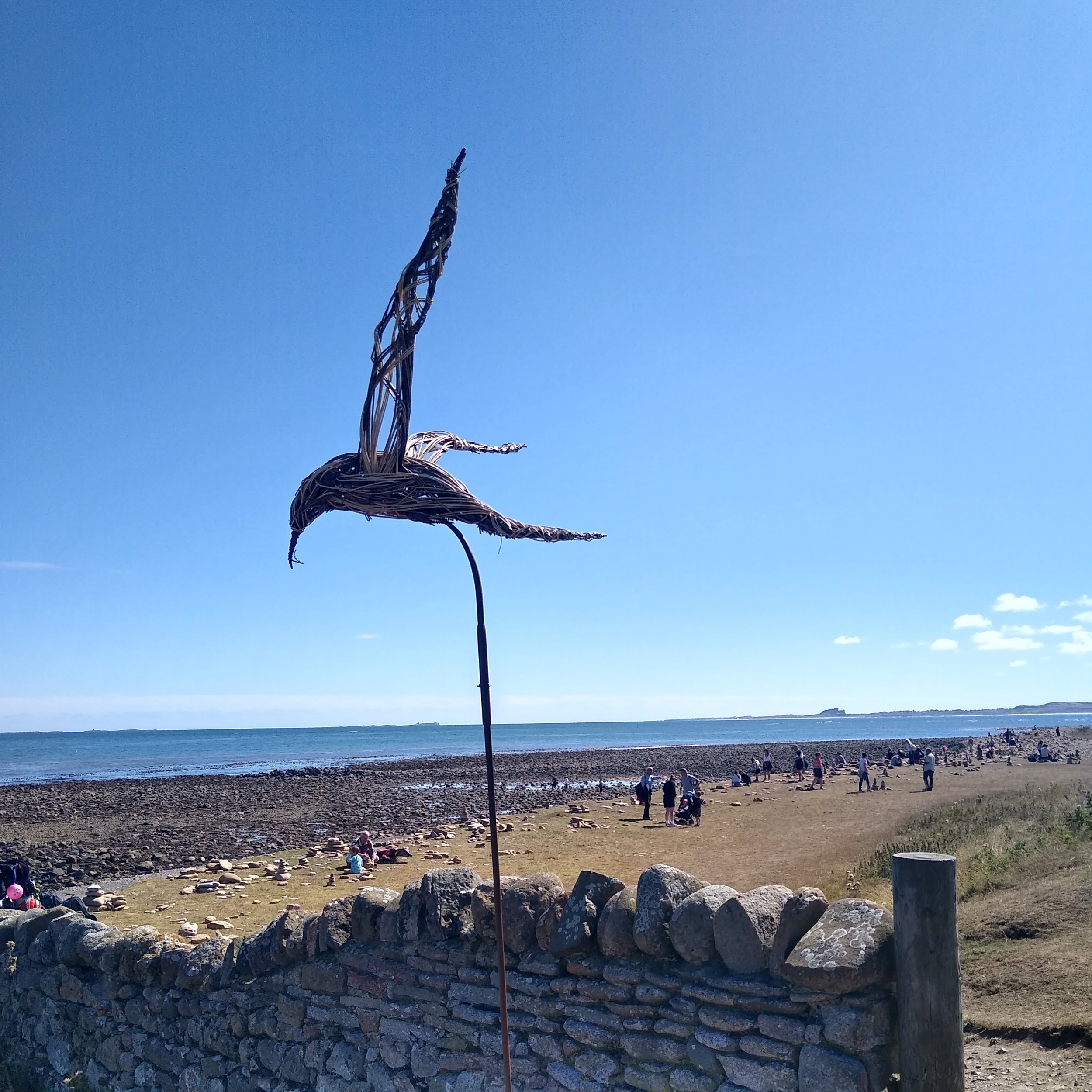
Alight at the Holy Island Chare Ends Car Park if you are planning to circumnavigate the island (9 miles). This route takes you through the National Nature Reserve, a breeding and nesting ground for a wide range of bird species, including brent geese, shrikes, flycatcher, skua, shearwaters, warblers and more. A shorter, 3-mile walk from the village, following the 'Straight Lonnen' road towards Emmanuel Head and following the shoreline around Castle Point, still affords excellent scenery and the opportunity for nature watching, as well as passing the lovely little enclosed Gertrude Jekyll garden along the route! Don't forget to visit the Window on Wild Lindisfarne on the road to the Castle for more information on the flora and fauna that call the island home and it is also worthwhile climbing the Lookout Tower behind the Priory for some spectacular views!
If you are an avid beach-comber, I’ve found some lovely sea glass and sea pottery on the island’s beaches.
Berwick-upon-Tweed via Budle Bay and Seahouses for the Farne Islands
The Arriva X18 from Berwick to Seahouses follows part of a route voted one of the nation’s most scenic bus journeys! Approx 60 min travel time and you can buy a pass that allows you to hop-off and on at different points, if you want to explore.
Enjoy the spectacular scenery on the journey, which follows the A1 out of Berwick with panoramic views of Lindisfarne, before detouring inland to the pretty village of Belford (once a major stop for coaches on the mail road) before heading back to the Coast road. If you're an avid bird watcher, you might want to hop off at Waren Mill for the views across Budle Bay - a haven for wildfowl and waders. Otherwise, stay on the bus through Bamburgh village and enjoy the views of the Farne Islands as you make the final run into the village of Seahouses.
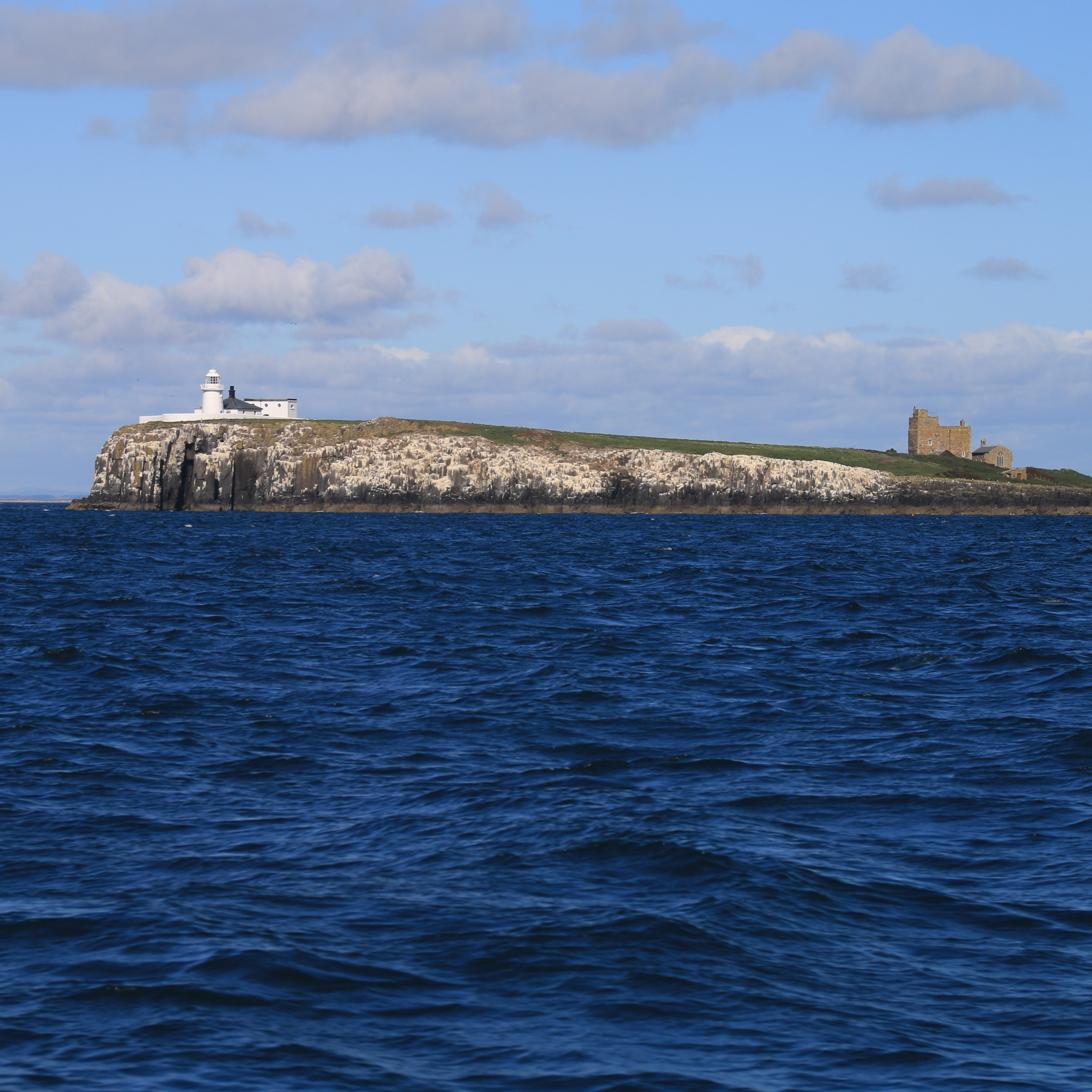
From Seahouses, you can either walk back along the beach or the dunes to Bamburgh village to take in the Castle and visit the RNLI Grace Darling Museum (a local heroine), or book one of the many boat trips that embark from Seahouses harbour to the Farne Islands - we love Serenity cruises. The recent bird flu epidemic has meant that trips which used to land on the islands are currently unavailable, but the boats still take you up close to the nesting and breeding sites around the main islands. On our trip we saw a wide range of birds (although sadly, no puffins, as it was the wrong time of year) as well as a huge colony of Atlantic Grey seals - one of the largest on the east coast of England.
Tweed Estuary boat trips
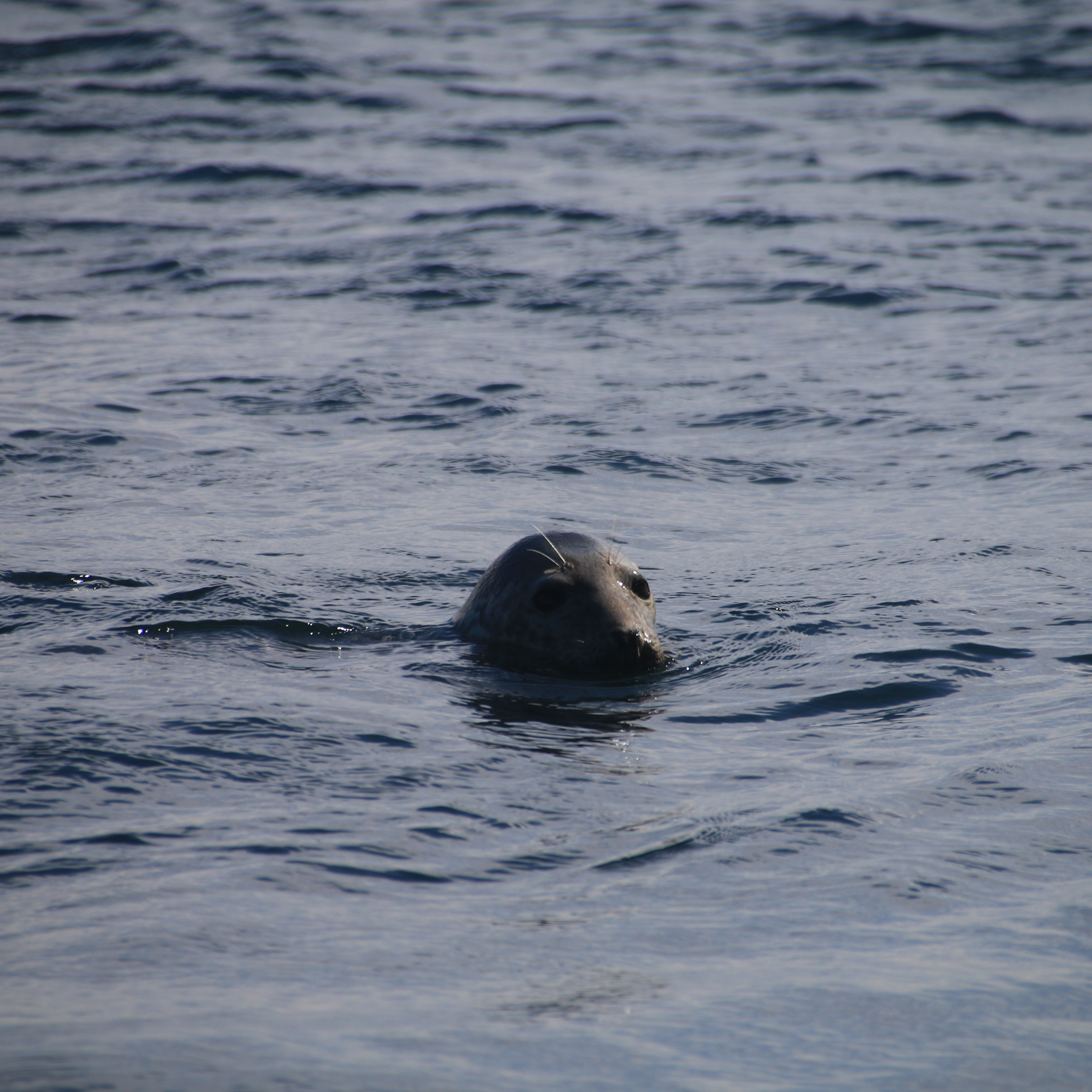
We usually make a point of taking visiting friends and family on the Berwick Boat Trip’s Estuary Trip as part of an introduction to the delights of Berwick-upon-Tweed. The trip lasts about an hour, taking in the Port of Berwick and out into the Estuary, where it is possible to see seals and seabirds galore (and dolphins, if you are lucky!) We also always learn something new from the live-commentary provided by the crew, whether about the wildlife or the history of the town! Berwick Boat Trips also run longer tours, including travelling up the Coast to St Abb’s - definitely one I’m adding to my bucket list - and up the River Tweed to the Union Chain Bridge, if you’d rather see more of the surrounding countryside, rather than the coast.
And so much more!
If you love wild, open spaces that give you the opportunity to spot all manner of flora and fauna, then you’ll be spoilt for choice in Northumberland. I’ve still got a bucket list of places I’d love to go to, but haven’t visited yet, including:
Ford Moss Nature Reserve - managed in partnership between the Northumberland Wildlife Trust and the Ford & Etal Estate. There is a circular walk around the edge of the Reserve that looks amazing and promises views of the Cheviots and the Till valley.
Walkworth to Alnmouth via the English Coastal Path - you can catch the train to Alnmouth and then take a bus to Walkworth, before walking back along the Coastal Path. Best done at low tide to enjoy walking the beach at Birling Carrs Rocks. If you are looking for a longer trek, you can continue along the Coastal Path to Craster, where you can catch the Arriva X18 bus back to Berwick.
The Sill, National Landscape Discovery Centre - to find out all about the Northumberland National Park’s landscape, culture and heritage. A bit trickier to get to by public transport from the top of the County, as it involves a train to Newcastle, then a train to Haltwhistle. Between Easter and end-October you can then take the Hadrian 's Wall Country Bus service (AD122), stopping at The Sill. It is about 2.5-3hrs travel time - I'll let you know if we go and survive the journey!
We’ve also had some amazing days out in the Cheviots, where we’ve spotted birds of prey, hare, skylarks, curlew and, most excitingly, red squirrels - but that deserves a blog post all of its own (if you can’t wait, there is an excellent bus service from Berwick-upon-Tweed to Wooler - the gateway to the Cheviots - with buses every couple of hours. Search for Border Buses 267 and 464).