Discover Berwick-upon-Tweed’s Famous Bridges: Old Berwick Bridge, the Royal Border Bridge and the Royal Tweed Bridge

Berwick Old Bridge with glimpses up-river of the Royal Tweed and Royal Border bridges (Gareth Edwards)
Berwick-upon-Tweed, perched on the border between England and Scotland, is a town full of charm and history. One of its many standout features is its three impressive bridges over the River Tweed, each with its own story to tell and views to provide. If you’re visiting the town, don’t forget to add them to your itinerary!
The Old Berwick Bridge (1624)
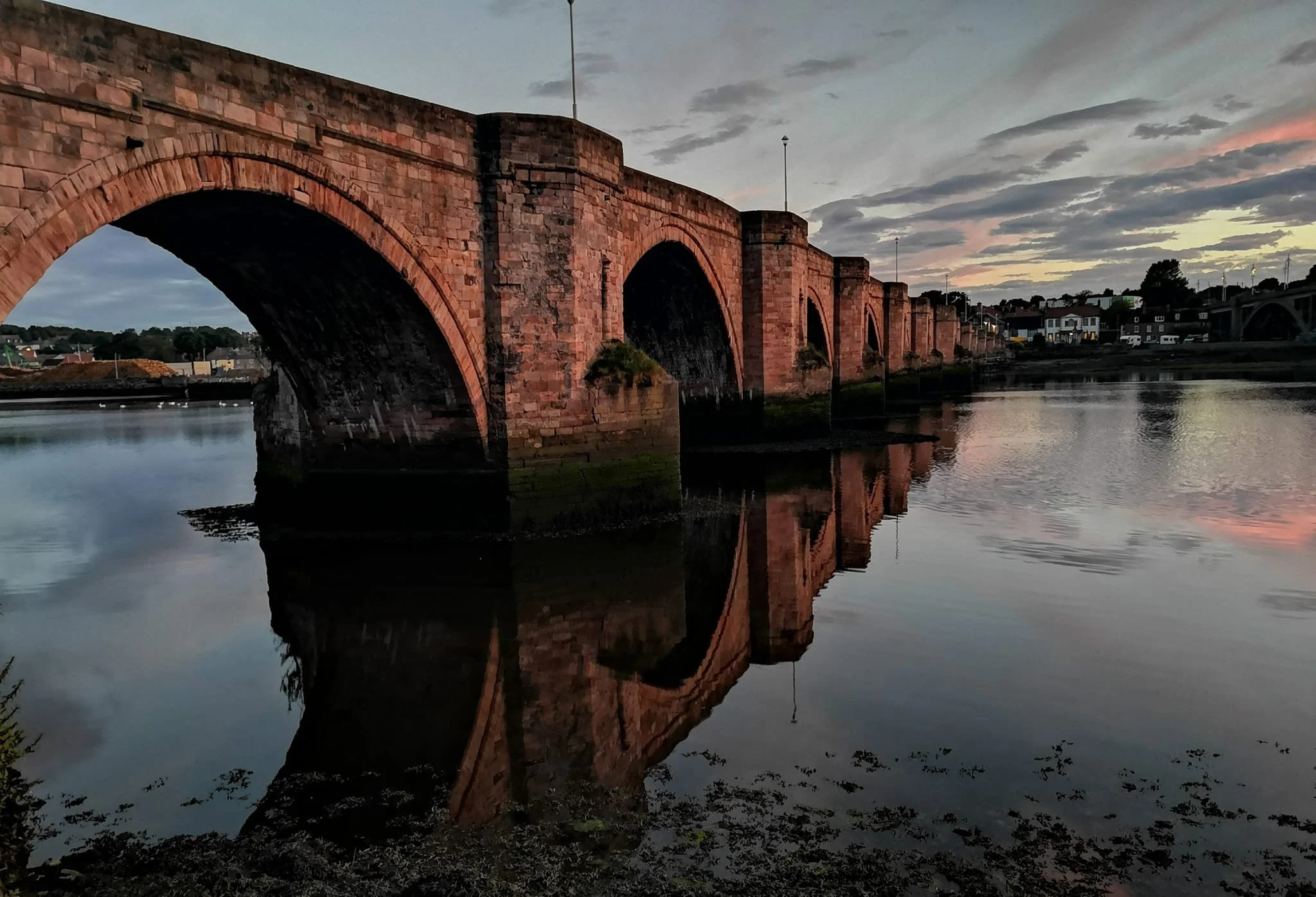
First up is the Old Berwick Bridge, which has been part of the town for 400 years.
A Testament to Royal Vision
Legend has it that James VI of Scotland crossed the original wooden bridge over the Tweed at Berwick, when travelling south to be crowned James I of England - and didn't think much of its rickety state! Regardless of the truth of this story, what is known is that the Crown funded the building of a new permanent stone structure, with work beginning in 1611 and the bridge opening to ‘traffic’ in 1624 (although further works continued for another decade).
Its 15 arches made it a cutting-edge design for its time, allowing people and goods to cross the River Tweed more reliably.
Today, the Old Bridge is still in use for both pedestrians and traffic. Cunning pedestrian refuges above the triangular cutwaters that support the bridge against the incoming tides allow you to stop at various points when crossing the bridge to admire the view of Berwick’s still bustling port and the river estuary down to the sea, as well as up river, taking in views of Berwick’s other two bridges. In 2024, the bridge underwent significant restoration, and the town celebrated its 400th anniversary with summer events, including a parade and a range of other festivities.
Walking across it now, you’re not just crossing the river—you’re walking through history. And you’ll find yourself in good company - L S Lowry (arguably most famous for his paintings of smoke-filled industrial towns) used to holiday in Berwick-upon-Tweed and captured many of the town’s features. If you stand at the Berwick-town edge of the bridge looking up towards the Guildhall, you can see a view that Lowry captured. [And if you’re interested in Lowry’s connection to Berwick-upon-Tweed, you might also be interested in following the Lowry Trail, which picks out a range of landmarks and views that Lowry painted - a walk leaflet is available from the Tourist Information on Walkergate].
The Royal Border Bridge (1850)
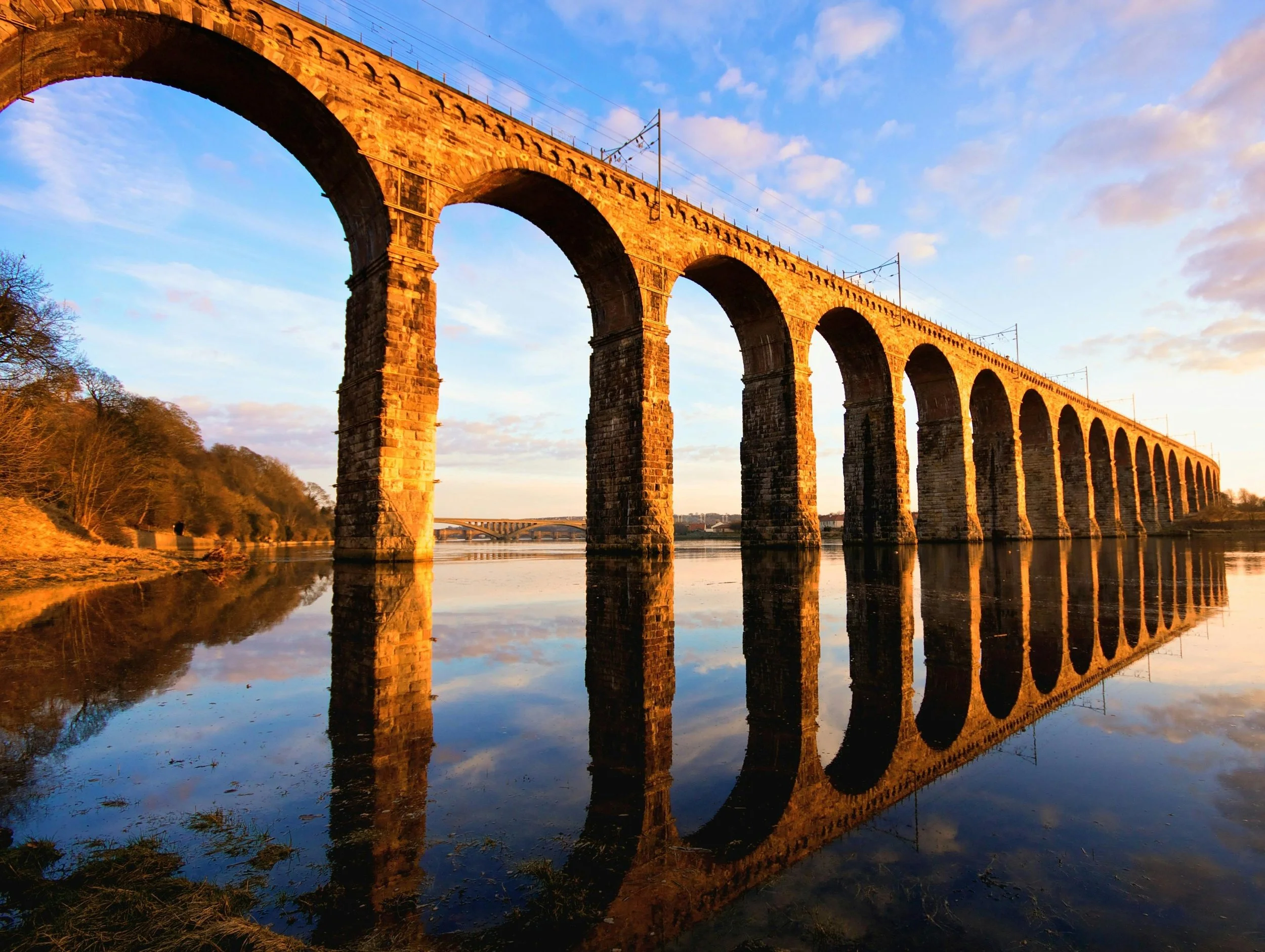
If you’ve ever travelled by train from London to Edinburgh, chances are your introduction to Berwick-upon-Tweed came courtesy of the Royal Border Bridge, part of the East Coast Mainline.
A Monument to the Railway Age
Opened by Queen Victoria herself in 1850, the viaduct was designed by the famous engineer Robert Stephenson. Its 28 graceful arches take trains high above the Tweed, giving travellers an excellent view of Berwick-upon-Tweed, Tweedmouth and Spittal, as well as out to sea. From this vantage point, it’s easy to see why Berwick has become a favourite for photographers and artists.
A lot of passengers I’ve overheard tend to be confused by the name of the bridge and assume that it marks the point of the English-Scottish border. Although the River Tweed does in places mark the border between the two countries, by the time the river reaches Berwick-upon-Tweed, the border is actually 3 miles further north.
The Royal Border Bridge isn’t just functional; it’s a masterpiece of Victorian engineering and a highlight of any visit to the town, even if you don’t come by train. Take the footpath from the railway station down through the pretty Castle Vale Park and you’ll come out on a wide path next to the riverside where you can admire the viaduct from below.
The Royal Tweed Bridge (1928)
Finally, we come to the Royal Tweed Bridge, affectionately known as the “New Bridge” to locals as it is by far the youngest bridge in the centre of the town.

A Modern Icon
The bridge was opened by the then Prince of Wales, later Edward VIII, on 16 May 1928 (hence the ‘Royal’) and is constructed from reinforced concrete. It was an engineering triumph of its time - holding the record for the longest single concrete span in the UK and designed to accommodate the growing demand for motor vehicles.
The Royal Tweed Bridge’s smooth, curved design contrasts with the older bridges, showing how engineering and architecture evolved over the centuries.
Up until the 1980s, the bridge carried the A1 over the River Tweed, but was then replaced by the A1 River Tweed bridge to the west of the town (also diverting more traffic away from the town centre. It’s still a main route for cars and pedestrians, offering great views of the other bridges and the town’s scenic surroundings.
Three Bridges, One Destination
What’s remarkable about Berwick-upon-Tweed’s bridges is how they tell a story of progress and innovation. From the Old Bridge’s historical charm to the Royal Border Bridge’s grand design and the Royal Tweed Bridge’s ‘modern’ functionality, each one reflects a different era in engineering.
But Berwick isn’t just a place to pass through—it’s a destination to explore. And if you’re a fan of architecture, history, or just a good view, then a visit to see these three bridges won’t disappoint.
If you’re feeling inspired, why not bring a piece of Berwick home with you? I illustrated the three bridges in pen-and-ink and have made this available as one of my eco-friendly art prints. It’s the perfect keepsake to remember your journey to the town.

Berwick-upon-Tweed, near the English/Scottish border, is famous for its three bridges, which span the River Tweed: the Old Berwick Bridge (built 1624), the Royal Border Bridge (built 1850) and the 'New' Royal Tweed Bridge (built 1928). This A4 Eco Art Print features pen and ink illustrations of these three bridges, each labelled in a hand-written, loose calligraphic style with it's name and the date it was opened. The illustrations are coloured in a dark grey tone, reflecting the colours of the river.
Printed in the UK on eco-friendly, high-quality eucalyptus paper, it's a perfect gift for fans of architecture, or those who love this - England's most northerly town.